
Changing your environment can help calm racing thoughts by engaging your senses with nature, such as listening to water or gazing at greenery, which reduces stress hormones and promotes relaxation. Decluttering your space clears mental overload, while natural or awe-inspiring elements foster a sense of calm and perspective. Practicing mindfulness outdoors or in thoughtfully arranged indoor spaces enhances present-moment awareness. You’ll discover simple yet effective ways to create a tranquil setting as you explore this approach further.
Key Takeaways
- Engage your senses with natural sounds, sights, and tactile experiences to promote relaxation and shift focus away from racing thoughts.
- Incorporate awe-inspiring natural elements like plants or water features to evoke calmness and perspective.
- Declutter your environment to reduce visual chaos, fostering mental clarity and mindfulness.
- Spend time outdoors or create outdoor-like indoor spaces to activate the parasympathetic nervous system and lower stress.
- Use calming environmental cues such as gentle scents, soothing music, or scenic imagery to anchor attention and ease mental overload.
Engage Your Senses With Nature

Connecting with nature can be a powerful way to calm your racing thoughts, especially since engaging your senses outdoors has been shown to lower stress hormones and reduce brain activity linked to anxiety. By actively engaging your senses through sensory activities like listening to natural sounds—birdsong, flowing water—you promote relaxation and stress relief. These natural sounds can soothe your nervous system, helping you calm your mind. Visual scenery, such as lush greenery or scenic landscapes, can make obstacles seem less formidable, fostering a sense of calm and clarity. Incorporating mindful observation of these scenic views encourages mindfulness, shifting focus away from racing thoughts. Activities like gardening or walking barefoot on grass stimulate your senses further, boosting mood and reinforcing feelings of tranquility. Overall, consciously engaging your senses with nature provides a simple, effective way to foster relaxation and mental clarity amid daily stress.
Use Environmental Cues to Foster Calmness
Environmental cues such as natural scenery, calming music, or art can profoundly influence your mental state by eliciting feelings of awe and promoting relaxation. These sensory stimuli activate your parasympathetic nervous system, which helps lower heart rate and blood pressure, fostering a state of calm. For instance, observing greenery or outdoor views reduces stress hormones like cortisol by up to 20%, enhancing mental clarity. Engaging with environmental cues that invoke awe can broaden your perspective and decrease activity in brain areas linked to self-focus and anxiety. Incorporating sensory stimuli like gentle scents or tactile experiences provides quick anchors, shifting your attention away from racing thoughts. By intentionally designing your environment with these cues, you create a mindful space that encourages relaxation and stress reduction. This strategic use of environmental cues leverages natural responses, making it easier to calm your mind and regain a sense of peaceful awareness.
Declutter to Promote Mental Clarity
When your surroundings are cluttered, it can be difficult to focus and feel at ease, as visual chaos often amplifies anxiety and mental overload. Decluttering your environment helps reduce this chaos, fostering mental clarity and supporting mindfulness. An organized space encourages you to stay present in the moment, which can be a powerful tool for stress relief. As physical clutter diminishes, you may notice a decrease in anxiety and an increase in emotional calm, making it easier to manage racing thoughts. Regular tidying sessions not only promote a sense of order but also contribute to improved psychological well-being by providing a visual cue for predictability and control. In this way, decluttering is more than just cleaning; it’s a deliberate act that clears mental space, enabling you to focus better, feel calmer, and cultivate a healthier emotional state.
Incorporate Awe-Inspiring Elements Into Your Space
Incorporating awe-inspiring elements into your space can be a powerful way to calm racing thoughts and foster emotional well-being. Natural elements like plants, water features, or scenic artwork evoke feelings of awe that promote calmness. Views of greenery or expansive skies from your window have been shown to reduce stress and elevate mood by triggering awe responses, shifting focus away from racing thoughts. Displaying images or videos of scenic landscapes or starry skies activates brain regions associated with awe, helping you reconnect with a sense of wonder and perspective. Creating an environment that encourages exploration—such as a small indoor garden or spaces filled with natural light—can deepen these feelings. These elements not only enhance the environment’s aesthetic appeal but also serve as anchors for emotional regulation, helping you cultivate a sense of calmness and emotional well-being amid mental chaos.
Practice Mindfulness Outdoors and Indoors
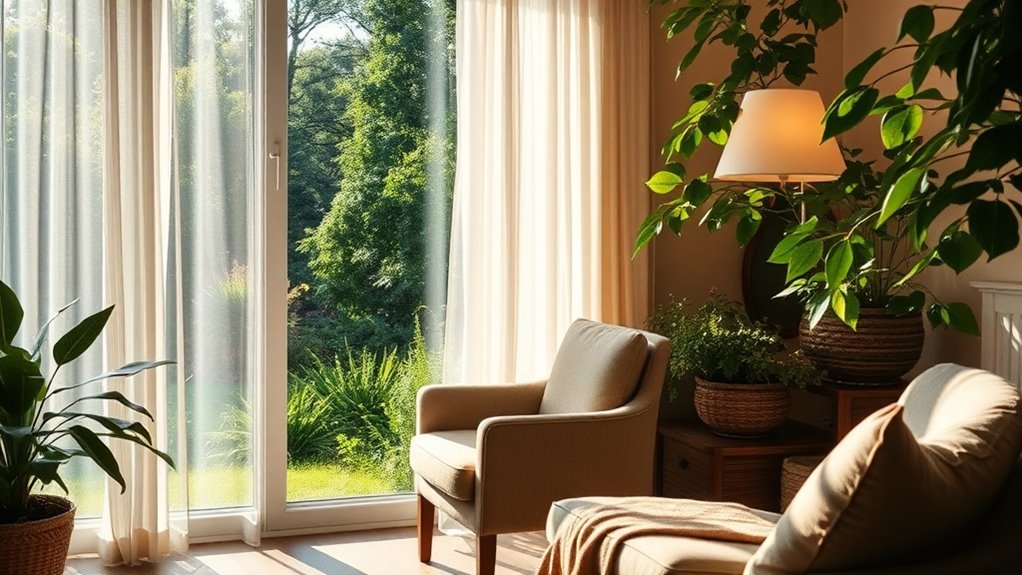
Practicing mindfulness both outdoors and indoors offers a practical way to calm racing thoughts and promote emotional balance. When you engage with mindfulness outdoors, observing natural scenery or listening to natural sounds activates your parasympathetic nervous system, fostering stress reduction. Exposure to green spaces buffers mental fatigue and lowers cortisol levels, helping you feel more centered. Even brief outdoor sessions, like five minutes in a park, can enhance mood and quiet negative inner chatter. Indoors, mindfulness techniques such as focusing on sensory details—like the texture of objects or the scent of essential oils—boost present-moment awareness, aiding in the detachment from racing thoughts. These practices serve as effective tools for emotional regulation and mental health. By intentionally incorporating mindfulness, regardless of your environment, you create space for calming thoughts and a sense of calm that extends beyond the moment, supporting overall mental well-being.
Common Questions
How Do You Calm a Racing Mind?
To calm your racing mind, try mindfulness meditation and deep breathing to anchor your focus. Incorporate sensory deprivation techniques or listen to calming music and aromatherapy scents in a cozy environment. Nature walks can foster awe and relaxation, while distraction techniques like engaging senses or observing surroundings help redirect thoughts. These evidence-based strategies reduce mental chatter, promote present-moment awareness, and support nervous system recalibration for lasting calmness.
Can Changing Your Environment Help With Anxiety?
Changing your environment can definitely help with anxiety. Nature therapy, incorporating green spaces and peaceful visuals, reduces stress and promotes relaxation. Minimizing clutter and ambient noise creates a calm setting, while calming scents and cozy spaces enhance comfort. Sensory deprivation or controlled environments help reset your nervous system, lowering cortisol. These strategies, supported by research, foster mental clarity and emotional regulation, making your environment a powerful tool to manage anxiety.
What Is the 3-3-3 Rule for Overthinking?
The 3-3-3 rule is a mindfulness exercise that helps manage overthinking by using sensory grounding. You identify three things you see, hear, and move three parts of your body, which redirects your focus away from racing thoughts. Combining this with breathing techniques, calming scents, or visual distraction can deepen relaxation. Regular practice, along with journaling prompts or nature exposure, enhances emotional regulation and reduces anxiety effectively.
What Is the Meaning of Racing Thoughts?
Racing thoughts are rapid, uncontrollable mental streams often triggered by anxiety or stress, involving worry, overanalysis, or rumination. To manage them, you can practice mindfulness exercises, breathing techniques, and sensory grounding to slow your mind. Incorporating relaxation methods, journaling strategies, physical activity, and improving sleep hygiene through cognitive restructuring helps break the cycle, reducing mental agitation and promoting calmer, more focused thinking.
To Sum it up
By reshaping your environment, you can transform chaos into calm. Imagine a cluttered mind quieted by a serene forest or a hectic room softened by gentle natural light. These shifts create a space where your thoughts can settle, much like still water reflects a clear sky. Small changes—adding nature’s beauty or decluttering—offer powerful, evidence-backed ways to soothe your racing thoughts, guiding you toward mental clarity amid life’s constant noise.