
To keep calm under pressure, you should focus on developing routines that promote emotional resilience, like practicing mindfulness and deep breathing daily. Recognize your emotions early and express them healthily to prevent escalation. Physical activities such as exercise or muscle relaxation can quickly reduce tension. Using sensory tools or creating a calming environment helps ground you in stressful moments. The key is consistent effort; if you stay committed, you’ll discover more ways to sustain your calmness when it really matters.
Key Takeaways
- Practice regular mindfulness meditation and deep breathing to activate relaxation responses and reduce stress levels.
- Maintain good posture and use physical movement like walking or yoga to release tension quickly.
- Use sensory tools such as calming scents or tactile objects to ground yourself and promote emotional stability.
- Recognize and label your emotions to prevent escalation and express feelings through journaling or trusted conversations.
- Develop routine habits that foster emotional resilience, like self-care and consistent mindfulness practices, to stay calm during pressure.
Understanding the Importance of Staying Calm Under Pressure
Understanding the importance of staying calm under pressure is essential because your ability to maintain composure directly impacts your decision-making and overall effectiveness in stressful situations. When you stay calm, you enable yourself to think clearly and rationally, avoiding impulsive reactions that can worsen the situation. Managing stress effectively allows you to stay focused on the task at hand, increasing your resilience and adaptability when facing challenges. Incorporating breathing techniques and other relaxation methods can help you manage anxiety, preventing it from overwhelming you. A calm demeanor not only benefits your own performance but also helps stabilize those around you, fostering teamwork and collective problem-solving. Recognizing that your emotional state influences outcomes underscores the importance of consciously cultivating calmness. By prioritizing relaxation and mindful breathing, you create a foundation for maintaining composure, even in the most demanding moments, ultimately enhancing your ability to navigate pressure successfully.
Practical Techniques to Cultivate Calmness Daily
Practicing daily techniques to cultivate calmness can considerably strengthen your ability to respond effectively under pressure. Incorporate mindfulness meditation or deep breathing exercises to activate your relaxation response, helping you stay calm amid chaos. Physical activities like walking or yoga reduce stress and boost emotional resilience, providing a foundation for clearer thinking. Visualization techniques allow you to imagine positive outcomes, preparing your mind for stressful moments and increasing confidence. Developing consistent habits—such as maintaining good posture and engaging in self-care—fosters a balanced mindset. Breaking tasks into smaller steps prevents overwhelm and keeps you centered. These techniques work synergistically to build resilience against stress, enabling you to approach pressure with steadiness and clarity. Remember, cultivating calmness is a continuous process, requiring intentional effort and self-awareness. Consistency in these practices enhances your capacity to maintain composure when it matters most.
| Technique | Effect |
|---|---|
| Mindfulness & Deep Breathing | Activate relaxation, reduce stress |
| Visualization | Build confidence, prepare the mind |
| Physical Activity | Strengthen resilience, stay centered |
Emotional Awareness and Healthy Expression in Stressful Moments
When stress hits, acknowledging and labeling your emotions can be a powerful way to prevent them from spiraling out of control. Developing emotional awareness helps you recognize your stress response early, allowing for better emotional regulation. Instead of suppressing feelings, expressing them in healthy ways—like journaling or confiding in trusted friends—reduces emotional buildup and fosters a sense of self-awareness. Practicing mindfulness during these moments encourages acceptance of your emotions without judgment, which can prevent impulsive reactions. Recognizing that stress and pressure are natural reactions helps normalize your emotional experience, reducing shame or panic. By consciously choosing healthy expression, you reinforce your capacity to manage emotions effectively, strengthening resilience under pressure. This approach not only clarifies your feelings in the moment but also cultivates a calmer, more centered response to stress, supporting your overall ability to stay composed when it matters most.
Physical Activities and Body Management Strategies
Engaging in physical activities such as walking, running, or yoga can be a highly effective way to manage stress in moments of high pressure. These activities release serotonin and endorphins, boosting your mood and reducing physical tension. Regular movement increases blood flow to your brain, sharpening focus and mental clarity when stakes are high. Practicing progressive muscle relaxation, where you tense and then relax muscle groups from toes to head, quickly alleviates muscle tension. Maintaining good posture and dropping your shoulders during stressful moments helps release physical signs of anxiety, fostering a sense of calm and relaxation. Applying acupressure to points like the inside of your wrist or neck provides immediate relief from tension and calms your nervous system.
| Action | Benefit |
|---|---|
| Physical activity (walk, yoga) | Reduces stress, releases calming chemicals |
| Posture correction | Eases muscle tension, promotes relaxation |
| Muscle relaxation techniques | Short-term relief from physical tension |
Environmental and Sensory Tools to Promote Relaxation
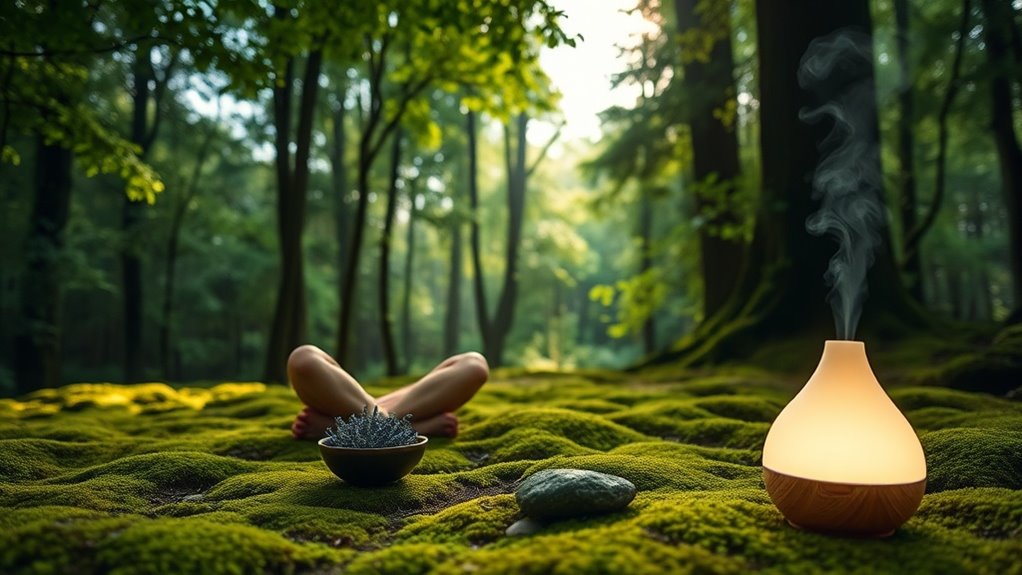
Environmental and sensory tools can be powerful allies in managing stress when pressure mounts. By incorporating elements like calming scents or tactile objects, you create a personal refuge that fosters safety and focus. These subtle adjustments can markedly enhance your ability to stay composed in challenging moments.
Aromatherapy and Essential Oils
Aromatherapy and essential oils serve as powerful environmental and sensory tools that can considerably enhance your ability to stay calm under pressure. By diffusing scents like lavender, chamomile, or bergamot, you activate the limbic system, fostering feelings of calm and focused relaxation. These oils have been scientifically shown to reduce cortisol levels and lower stress and anxiety, especially when combined with deep breaths. Incorporating aromatherapy into your environment offers quick relief during stressful moments and promotes overall resilience. Here’s a quick overview:
| Essential Oils | Benefits |
|---|---|
| Lavender | Reduces anxiety, promotes calm |
| Chamomile | Eases stress, encourages sleep |
| Bergamot | Uplifts mood, lowers blood pressure |
| Diffusing | Enhances emotional stability |
Comforting Personal Objects
Using personal objects as tactile anchors can considerably enhance your ability to stay grounded during stressful moments. A comforting object—like a smooth stone, plush toy, or sentimental keepsake—serves as a sensory anchor that fosters relaxation and emotional stability. The tactile stimulation from these items helps redirect your focus, easing anxiety and promoting a sense of calm. Aromatherapy paired with these objects can amplify stress reduction by activating relaxation responses. Environmental tools like stress balls or textured fabrics also serve as sensory anchors, providing physical cues that anchor you in the present. By integrating comforting objects into your routine, you create a reliable source of grounding, helping you maintain emotional stability and manage pressure more effectively.
Building Long-Term Resilience Through Mindfulness and Routine
Building long-term resilience depends on cultivating daily mindfulness and establishing consistent habits that support your mental and physical well-being. These routines strengthen your ability to manage stress, improve focus, and adapt in the face of pressure. By integrating small, intentional practices, you create a foundation that sustains you through life’s inevitable challenges.
Cultivate Daily Mindfulness
Practicing mindfulness daily, even for just 10 minutes, can have a profound impact on your ability to handle pressure over the long term. By integrating routines like focused breathing or body scans, you effectively rewire your brain to respond more calmly during stressful moments. This consistent practice boosts activity in your prefrontal cortex, enhancing self-control and decision-making under pressure. As you develop a daily mindfulness habit, you become more aware of emotional triggers that escalate stress, allowing you to manage them proactively. Routine mindfulness also lowers cortisol levels, fostering a more stable mood and greater calm in challenging situations. Over time, these small daily efforts build emotional resilience, equipping you to navigate pressure with a steadier, more composed mindset.
Establish Consistent Habits
Establishing consistent habits is essential for developing long-term resilience to stress because it creates a predictable framework that your mind can rely on during challenging moments. A steady routine incorporating stress-reduction techniques like mindfulness, journaling, or physical activity fosters calmness and stability. When these habits become ingrained, they help reduce uncertainty and anxiety, enabling you to respond more calmly under pressure. Regularly practicing relaxation techniques while calm enhances their effectiveness when stress peaks. Evidence shows that adherence to routines and mindfulness not only promotes resilience but also lowers cortisol levels, improving overall stress management. By cultivating these habits, you build a resilient foundation that supports mental clarity and emotional balance, empowering you to face high-pressure situations with greater confidence and calmness.
Common Questions
How to Handle Being Under Pressure?
When you’re under pressure, focus on mindfulness techniques like grounding yourself in the present. Use breathing exercises to stay calm and positive affirmations to boost confidence. Effective time management helps break tasks into manageable steps, while setting boundaries prevents overwhelm. Don’t hesitate to seek support—sharing your feelings can lighten your load. Combining these strategies allows you to handle pressure with clarity, resilience, and emotional balance, ensuring you stay composed and in control.
How to Reduce Stress and Anxiety?
To reduce stress and anxiety, embrace calming cues like mindfulness meditation and breathing techniques, which ground you in the present moment. Incorporate positive affirmations to foster confidence, while effective time management prevents overwhelm. Physical activity releases endorphins that boost mood, and social support offers reassurance. By blending these strategies, you create a holistic, compassionate approach to calming your mind and easing your anxious thoughts.
How to Stop Pressuring Yourself?
To stop pressuring yourself, start practicing self-compassion and mindfulness exercises to recognize when you’re being overly critical. Use positive affirmations to reinforce your worth, and improve your time management to set realistic goals. Boundary setting is essential—learn to say no and prioritize self-care. Incorporate relaxation techniques like deep breathing to calm your mind. These strategies help create a balanced perspective, easing self-imposed pressure and fostering resilience.
How to Deal With Extreme Pressure?
When facing extreme pressure, think of yourself as a ship steering stormy seas—staying steady is key. Use mindfulness techniques and breathing exercises to anchor yourself, while visualization strategies help you see calm waters ahead. Combine positive affirmations with effective time management to regain control, and lean on supportive networks for strength. This approach allows you to stay resilient, clear-headed, and focused, even when the storm feels relentless.
To Sum it up
Staying calm under pressure is like tending a delicate garden—you need patience, awareness, and consistent care. By understanding your emotional responses, practicing daily techniques, and managing your environment, you nurture resilience that blossoms in stressful moments. It’s not about freezing chaos but guiding it like a skilled gardener. With each mindful step, you build a foundation of inner strength, transforming pressure into growth opportunities. Your calmness becomes the steady sunlight that helps your inner garden thrive.