
You can definitely strengthen your flexibility through daily practice by incorporating consistent stretches that target major muscle groups. Focus on holding static stretches for 15-30 seconds and gradually increasing intensity over time. Combining static and dynamic stretches helps improve mobility and joint health. Regular effort builds momentum, reduces stiffness, and prevents injuries. Stay patient and persistent; long-term progress comes from sustained routines. If you keep practicing regularly, you’ll discover effective strategies to maximize your flexibility journey.
Key Takeaways
- Consistent daily stretching builds muscle elasticity and joint mobility over time.
- Incorporating static and dynamic stretches regularly enhances flexibility gains.
- Short, daily routines reinforce habits and prevent muscle tightness.
- Gradually increasing stretch duration and intensity promotes long-term flexibility development.
- Tracking progress and maintaining routine ensures sustained improvements and injury prevention.
Understanding the Benefits of Flexibility
Have you ever wondered how improved flexibility can positively impact your daily life? When you work on increasing your flexibility through regular stretching, you expand your range of motion, making everyday movements smoother and easier. Better flexibility helps reduce stiffness, allowing you to move more freely without discomfort. As you stretch consistently, blood flow improves to your muscles and joints, supporting faster healing and overall circulation. This not only keeps your body healthier but also lowers your risk of injuries, since muscles and tendons can move more freely during activity. Enhanced flexibility also contributes to better posture and can lessen chronic pain caused by muscle tightness. Plus, maintaining good flexibility can boost your performance in sports and help you recover faster after exercise. Overall, developing flexibility is a simple yet powerful way to support your overall health, comfort, and mobility every day.
Essential Stretching Techniques for Daily Practice
To effectively incorporate stretching into your daily routine, focus on static stretches that hold each position for 15 to 30 seconds, repeating them 2 to 3 times. This approach guarantees your muscles gradually adapt without overstretching. Concentrate on major muscle groups like hamstrings, quadriceps, hip flexors, and shoulders to support overall joint mobility. When you perform flexibility exercises, move gently into each stretch and avoid bouncing, which can cause muscle strain or injury. Consistent stretching after workouts or during relaxing moments maximizes muscle elongation and stress relief. Remember, patience is key—your flexibility will improve over time with regular practice. Incorporate these techniques into your daily schedule, and you’ll notice increased range of motion, reduced tension, and enhanced joint health. By establishing a mindful, consistent stretching routine, you’re supporting your body’s long-term flexibility and overall well-being.
Key Muscle Groups to Target Regularly
Focusing on key muscle groups like the neck, shoulders, chest, trunk, lower back, hips, legs, and ankles is crucial for maintaining balanced flexibility and preventing tightness from daily activities. The major muscle groups, including the hip flexors, play an essential role in your mobility and posture. Tight hip flexors, for example, can limit your range of motion and cause discomfort. Incorporating targeted stretches for these muscles into your stretching routine helps improve flexibility and reduces stiffness. Regularly stretching these areas for 15-20 seconds, repeating 2-3 times, ensures balanced muscle length and supports overall functional movement. Neglecting any of these groups could lead to imbalances and potential injuries. Prioritizing the major muscle groups in your stretching routine is a strategic way to promote long-term flexibility, enhance posture, and prevent tightness caused by daily stresses and sedentary habits.
Creating an Effective Stretching Routine
To create an effective stretching routine, consistency is key—you should plan daily sessions that fit into your schedule. Applying proper technique, like controlled movements and holding each stretch, helps prevent injury and maximizes benefits. By establishing a regular time and following these techniques, you’ll build flexibility safely and steadily.
Consistent Scheduling Strategies
Establishing a consistent schedule for your stretching routine can markedly improve your flexibility over time. When you commit to consistent scheduling, whether in the morning or evening, your body begins to adapt more effectively. Dedicate at least 10-15 minutes per session, targeting all major muscle groups to promote balanced flexibility. Incorporate stretching into existing daily activities, like after workouts or during breaks, to reinforce your daily practice. Using reminders or alarms can help you stay on track, ensuring you stretch at least 2-3 times weekly. Tracking your progress and gradually increasing duration or intensity keeps motivation high and prevents plateaus. By making your stretching routine a consistent habit, you lay a solid foundation for lasting flexibility and improved overall mobility.
Proper Technique Application
Using proper technique is essential for creating an effective stretching routine that promotes flexibility and prevents injury. Focus on slow, controlled movements to gradually increase the stretch intensity without risking muscle strain. Remember to hold the stretch for at least 15-20 seconds, giving your muscles time to lengthen properly. Steady breathing helps relax your muscles and prevents tension buildup. Avoid bouncing or overstretching, as these can cause tears or injury. Consistency is key—incorporate stretching into your routine 2-3 times weekly for best results.
- Maintain proper technique by controlling your movements
- Hold each stretch long enough for effective muscle elongation
- Gradually increase intensity to avoid overstretching or injury
Incorporating Static and Dynamic Stretches
Incorporating both static and dynamic stretches into your routine can considerably enhance your flexibility and reduce injury risk. Static stretches involve holding each position for 15-30 seconds after your workout, helping your muscles elongate and improve overall flexibility. Dynamic stretches, like leg swings or arm circles, are ideal before exercise to warm up muscles and increase your range of motion. Combining these two types of stretches at least 2-3 times weekly can lead to noticeable improvements in flexibility over time. To maximize benefits, gradually increase the duration of static stretches toward 1-2 minutes, allowing your muscles to adapt and elongate more effectively. Remember, maintaining proper technique and controlled movements during both static and dynamic stretches is essential—this minimizes injury risk and guarantees you gain the most from your practice. Consistency and patience are key to revealing greater flexibility through these stretching techniques.
Tips for Safe and Proper Stretching
To guarantee you get the most benefit from stretching while minimizing the risk of injury, it’s essential to follow some key safety tips. Always warm up with light activity for 5-10 minutes before stretching; this prepares your muscles and reduces strain. When stretching, hold static stretches for at least 15-30 seconds and avoid bouncing, which can cause overstretching or muscle strain. Stretch gradually, within a comfortable range, listening to your body to prevent pushing too far. Focus on steady, even breathing during each stretch to promote relaxation and enhance effectiveness. Stretching when your muscles are warm, such as after exercise, yields the best results and supports your flexibility goals. Remember, safety in stretching isn’t just about avoiding injury but also about creating a sustainable routine that encourages progress and confidence in your flexibility journey.
- Prioritize warming up to protect your muscles
- Avoid bouncing to prevent overstretching
- Breathe steadily to enhance relaxation
Recommended Duration and Frequency

To see steady improvements, aim to stretch at least 2 to 3 times a week, focusing on holding each stretch for about 15-20 seconds. Incorporating shorter, daily sessions of 5-10 minutes can also make a meaningful difference over time. Consistency is key to developing balanced flexibility across all major muscle groups.
Consistent Practice Schedule
Establishing a consistent stretching routine is essential for achieving lasting flexibility improvements. By sticking to a regular practice schedule, you help your muscles adapt and lengthen over time. Aim to stretch major muscle groups at least 2-3 times per week, integrating it into your daily routine or after workouts. Hold each stretch for 15-30 seconds and repeat 2-3 times for the most favorable results. This consistency prevents muscle stiffness and promotes long-term gains in joint range of motion. Remember, muscle flexibility develops gradually; patience and persistence are key.
- Consistency builds momentum, making flexibility gains more sustainable
- Regular stretching prevents setbacks caused by muscle tightness
- Small, daily efforts lead to significant, lasting improvements
Optimal Stretch Duration
Holding each stretch for the right amount of time can make a significant difference in your flexibility progress. The ideal stretch duration is about 15-20 seconds per stretch, allowing your muscles to elongate effectively without overstretching. Repeating each stretch 2-3 times enhances muscle elongation and reinforces your flexibility routine. Consistency is essential—aim to stretch at least 2-3 times weekly to see steady improvement. Incorporating a variety of stretches that target all major muscle groups within a total session of around 60 seconds maximizes results. Remember, maintaining proper stretch duration helps prevent injury while promoting gradual, sustainable flexibility gains. By adhering to these guidelines, you’ll establish an effective routine that steadily enhances your muscle elongation and overall flexibility.
Monitoring Progress and Increasing Flexibility
Tracking your progress is essential for increasing flexibility because it helps you understand what’s working and where to improve. By noting your stretch duration and ease of movement over time, you can identify patterns and adjust your routine accordingly. Using a flexibility journal or app simplifies progress monitoring, making it easier to see steady gains. As your flexibility improves, gradually increase your stretch duration from 15-20 seconds to 30-60 seconds to challenge muscles safely. Regular reassessment through specific stretches or mobility tests every few weeks ensures you stay on track. To deepen your understanding:
- Keep detailed records of stretch duration and comfort levels
- Challenge your muscles with new stretches targeting tight areas
- Celebrate small milestones to maintain motivation
Consistent progress monitoring keeps you focused and helps you fine-tune your daily practice for maximum results.
Combining Stretching With Other Physical Activities
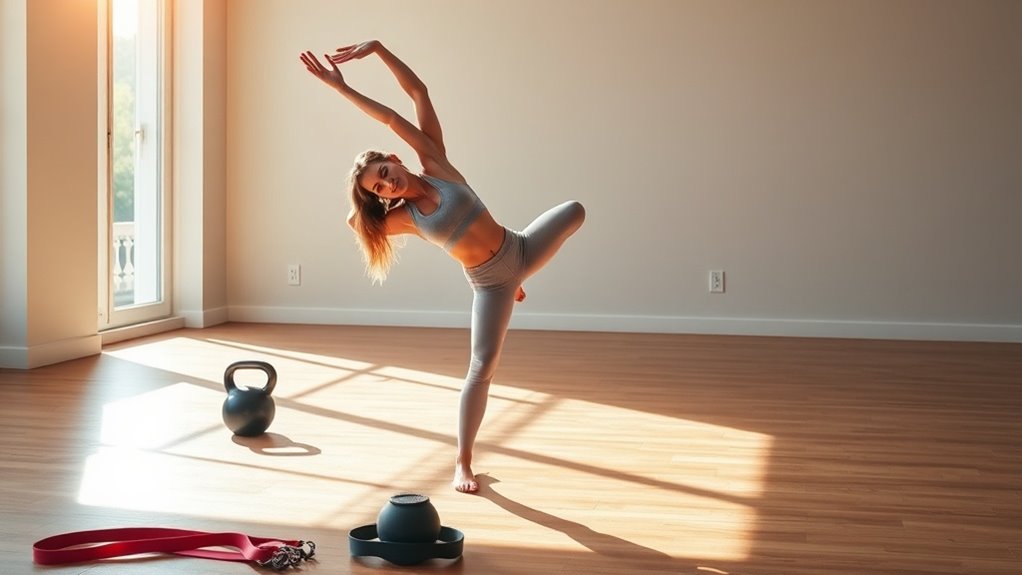
Integrating stretching into your regular activities can markedly boost your flexibility and reduce injury risk. Whether warming up with dynamic stretches before cardio, relaxing with post-exercise routines, or practicing yoga and tai chi, combining these practices supports overall mobility. By intentionally pairing stretching with your workouts, you create a balanced approach to long-term flexibility.
Incorporate Stretching Pre-Workout
To effectively prepare your muscles for exercise, incorporating dynamic stretches such as leg swings or arm circles before your workout can make a significant difference. This warm-up boosts circulation, increases flexibility, and reduces injury risk. Proper stretching during this phase helps your muscles transition smoothly into activity, enhancing overall performance. Remember, a well-rounded warm-up includes movement that mimics your workout to activate targeted muscle groups.
- Improves muscle elasticity and joint mobility
- Prepares your nervous system for activity
- Sets a mindful routine that encourages consistency
Integrating stretching into your warm-up fosters better flexibility and helps you perform with greater ease. Make it a habit to dedicate 5-10 minutes to this routine, and you’ll notice long-term improvements in your physical resilience.
Stretch After Exercise Sessions
After your workout, taking time to stretch helps your muscles stay flexible and recover more effectively. Incorporating stretching into your post-workout routine lengthens muscles while they are warm and pliable, promoting better flexibility. Static stretches held for 15-30 seconds enhance your range of motion and reduce muscle stiffness, making subsequent workouts easier. Consistent post-workout stretching not only prevents tightness but also supports long-term flexibility gains. When you combine stretching with other physical activities, you create a balanced approach that promotes overall mobility and decreases injury risk. Prioritizing this step in your cool-down routine ensures your muscles recover properly and stay resilient, making daily practice a crucial part of improving your flexibility.
Combine Yoga or Tai Chi
Combining yoga or tai chi with your regular stretching routine can considerably enhance your flexibility by encouraging gentle, controlled movements that engage multiple muscle groups at once. These practices improve joint range of motion and muscle elasticity through flowing postures, making your stretching more effective. Practicing yoga or tai chi daily promotes holistic movement patterns, leading to greater flexibility gains than stretching alone. They also help reduce muscle stiffness and improve posture, creating a balanced, more adaptable body. Additionally, these activities support stress relief and increase body awareness, which can amplify your stretching benefits.
- Develops mind-body connection for better movement control
- Enhances muscle elasticity and joint mobility
- Promotes consistency for sustained flexibility improvements
Staying Consistent for Long-Term Flexibility Gains
Maintaining consistency in your stretching routine is essential for achieving lasting flexibility benefits. When you commit to regular practice, your body gradually adapts, making flexibility gains more sustainable. Incorporating consistent stretching at least 2-3 times weekly helps improve joint mobility and prevents stiffness. Daily practice not only supports ongoing progress but also fosters habit formation, increasing adherence over time. Consistency also minimizes injury risk and enhances overall performance.
| Benefit | Explanation |
|---|---|
| Long-term progress | Consistent stretching ensures steady flexibility gains over time. |
| Injury prevention | Regular routines strengthen muscles and joints, reducing injury risk. |
| Habit formation | Daily practice encourages discipline, making stretching a habit. |
| Physical performance | Flexibility improvements boost movement efficiency and strength. |
| Joint mobility | Routine stretching maintains and improves joint function. |
Common Questions
Can Flexibility Exercises Be Done Everyday?
Yes, you can do flexibility exercises every day. Incorporating consistent stretching routines helps prevent injuries, promotes muscle relaxation, and improves your joint range of motion. Even short daily sessions targeting different muscle groups make a difference. Just listen to your body, avoid overstretching, and include gentle movements. Regular practice not only enhances flexibility but also supports overall comfort and mobility, making daily stretching a safe and effective habit.
How Can I Improve My Flexibility Daily?
To improve your flexibility daily, dedicate consistent, controlled stretching routines that target major muscle groups, dispelling flexibility myths that limit progress. Yoga benefits, like enhanced elasticity and ease, are achievable through gentle, gradual movements. Incorporate dynamic stretches in your daily activities and static holds post-exercise, holding each for 15-30 seconds. Patience and persistence, paired with proper warm-ups, will steadily stretch, strengthen, and support your flexibility journey.
Can You Get More Flexible With Practice?
Yes, you can get more flexible with consistent practice. Incorporate stretching routines, yoga poses, and mobility drills into your daily schedule. Focus on gradual, gentle stretches that target different muscle groups, holding each for 15-20 seconds. Over time, this routine helps increase your joint range of motion and muscle elasticity. Remember, progress varies for everyone, so stay patient and persistent—your flexibility will improve with dedication and proper technique.
How Can Flexibility Be Used in Daily Life?
Flexibility helps you in daily life by making movements like bending, reaching, and lifting easier and safer. Using stretching techniques improves muscle elasticity, which reduces strain and prevents injuries. It also enhances your posture and balance, making everyday tasks more comfortable. Maintaining good flexibility supports joint health and helps you stay active and independent longer, especially as you age. Incorporate gentle stretches to experience these benefits and protect your body.
To Sum it up
By committing to daily stretching, you’re planting seeds of flexibility that grow stronger each day. Imagine your body as a tree, roots deepening, branches reaching further—each routine session nurturing growth. Consistency turns small, mindful movements into lasting change. So, embrace each stretch as a step toward a more agile, resilient you. The journey may be simple, but the transformation is profound—your future self will thank you for the care you give today.