
Reducing evening stimulation considerably enhances your sleep quality by supporting melatonin production and calming your nervous system. Limiting screen time and exposure to blue light prevents melatonin suppression, while avoiding vigorous exercise before bed reduces arousal. Engaging in relaxation techniques like deep breathing and creating a calm sleep environment also promote restful sleep. By minimizing mental and physical arousal in the evening, you can achieve deeper, more restorative sleep—discover how making these adjustments can improve your sleep long-term.
Key Takeaways
- Limit screen time and blue light exposure an hour before bed to preserve melatonin levels.
- Engage in relaxing activities like reading or listening to soothing music to signal your brain to wind down.
- Create a calm sleep environment with darkness, quiet, and cool temperatures to enhance sleep quality.
- Practice relaxation techniques such as deep breathing or progressive muscle relaxation to calm the nervous system.
- Avoid stimulating activities like vigorous exercise or lively conversations close to bedtime to prevent increased arousal.
Why Evening Stimulation Disrupts Sleep
Evening stimulation disrupts sleep primarily by interfering with the body’s natural melatonin production and arousal regulation. Exposure to blue light emitted by smartphones, tablets, or computers significantly suppresses melatonin levels—by up to 50%—delaying sleep onset. This reduction hampers your body’s ability to *shift* into sleep efficiently. Additionally, engaging in stimulating activities close to bedtime increases physiological arousal, elevating adrenaline and cortisol levels. These hormones counteract the sleep-promoting effects of melatonin, making relaxation more difficult. The heightened alertness caused by physical or mental stimulation prolongs sleep latency and reduces sleep quality. Stimulating activities and blue light exposure activate the sympathetic nervous system, which maintains your alertness and prevents the natural decline in arousal needed for restful sleep. Consequently, evening stimulation hampers your circadian rhythm, leading to difficulty falling asleep and impairing overall sleep architecture.
The Impact of Screen Time and Bright Lights
Exposure to blue light from screens suppresses melatonin production, which can delay sleep onset and decrease sleep quality. Additionally, bright artificial lighting in the evening can shift your circadian rhythms, making it harder to feel sleepy naturally. Limiting screen use and dimming lights before bed support melatonin release and promote more restorative sleep.
Blue Light Disrupts Melatonin
Blue light emitted from screens and bright artificial lights has a significant physiological impact by suppressing melatonin production, a hormone essential for regulating sleep-wake cycles. Exposure to blue light can reduce melatonin levels by up to 22%, delaying sleep onset and decreasing overall sleep quality. This disruption shifts circadian rhythms, making it harder to feel sleepy at night. Using electronic devices an hour before bed further diminishes melatonin, leading to longer sleep latency and reduced total sleep time. Limiting screen use and employing blue light filters in the evening help maintain healthy melatonin levels, supporting better sleep.
| Light Type | Effect on Melatonin | Impact on Sleep Quality |
|---|---|---|
| Blue light | Suppresses up to 22% | Delays sleep onset |
| Bright artificial lights | Shift circadian rhythms | Reduces sleep quality |
| Evening screen use | Decreases melatonin | Longer sleep latency |
| Blue light filters | Preserves melatonin | Improves sleep quality |
Bright Lights Delay Sleep
Bright lights, particularly those emitted from screens and artificial lighting, have been shown to markedly delay sleep onset by suppressing melatonin production. Exposure to bright lights in the evening shifts your circadian rhythm and makes it harder for you to fall asleep naturally. This disruption can extend the time needed to reach deep sleep stages, reducing sleep quality. To mitigate these effects, consider:
- Limiting screen time at least an hour before bed
- Using dim, warm-colored lighting in the evening
- Employing blue light filters on devices
How Physical Activity Before Bed Affects Rest
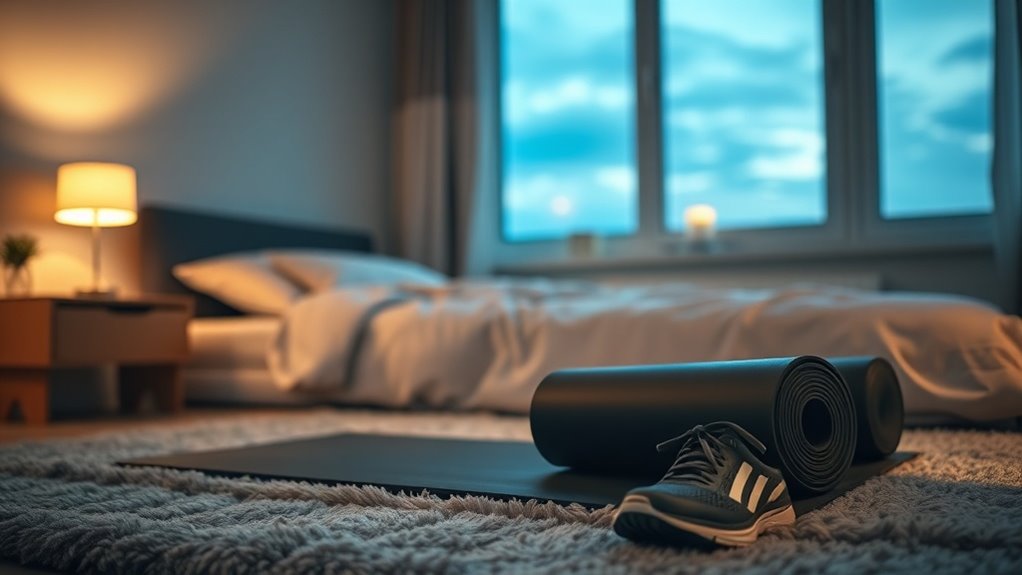
Engaging in vigorous exercise close to bedtime can elevate adrenaline levels and core body temperature, hindering sleep onset. Conversely, exercising earlier in the day supports melatonin production and enhances sleep quality. The intensity and timing of physical activity are critical factors in minimizing evening arousal and promoting restful sleep.
Timing Matters for Exercise
Timing is a critical factor in determining how exercise impacts sleep quality, as physical activity performed too close to bedtime can disrupt sleep onset. Engaging in vigorous exercise within two hours of bedtime elevates adrenaline and core body temperature, delaying sleep initiation. Conversely, exercising earlier in the day supports overall sleep architecture. Key points include:
- Morning workouts combined with bright daylight help regulate circadian rhythms.
- Moderate exercise earlier in the day enhances deep sleep stages.
- Late-evening exercise may increase cortisol and heart rate, hindering sleep onset.
Therefore, to optimize sleep, schedule vigorous exercise well before bedtime. Doing so allows your body to recover and promotes natural melatonin production, leading to more restorative, deep sleep.
Intensity Impacts Sleep Quality
Intense physical activity before bed can markedly impair sleep quality by elevating physiological arousal levels. Vigorous exercise, especially within two hours of bedtime, increases adrenaline and cortisol, which interfere with sleep onset. Additionally, exercise raises body temperature and heart rate, delaying the shift to sleep and reducing the duration of deep sleep stages. Elevated body temperature hampers the body’s natural cooling process essential for initiating restorative sleep. High-intensity workouts late in the evening often lead to fragmented sleep and diminished deep sleep, impairing overall rest quality. Conversely, lower-intensity activities like yoga or stretching can promote relaxation and support better sleep depth. Consequently, the intensity of your evening exercise plays a vital role in determining sleep quality and restorative sleep processes.
Morning Activity Supports Rest
Morning physical activity plays a vital role in supporting restful sleep by regulating circadian rhythms and enhancing sleep-related hormone production. Engaging in morning exercise exposes you to bright daylight, which reinforces your body’s natural sleep-wake cycle, thereby improving sleep quality. Additionally, morning activity increases the production of melatonin, facilitating easier shifts into deep sleep stages. Regular physical activity during the day also reduces stress and anxiety, creating a more relaxed state conducive to rest. To optimize sleep benefits, consider:
- Exercising outdoors in the morning for light exposure
- Timing workouts early enough to prevent nervous system overstimulation
- Incorporating consistent morning activity to maintain circadian rhythm regulation
These strategies collectively support restorative sleep and overall circadian health.
The Role of Relaxation in Calming Your Mind

Relaxation techniques play a essential role in calming the mind and facilitating the shift to sleep by activating the parasympathetic nervous system. These methods reduce stress hormones like cortisol, promoting physiological states conducive to restful sleep. Slow, diaphragmatic breathing—lasting 4-6 seconds per inhalation and exhalation—effectively lowers heart rate and blood pressure, fostering a calmer mental state. Incorporating calming activities such as listening to soothing music or using lavender aromatherapy has been shown to decrease cognitive arousal, easing sleep onset. Additionally, practicing mindfulness or guided imagery helps diminish racing thoughts that interfere with sleep. Establishing a consistent pre-sleep relaxation routine signals the brain to wind down, improving sleep quality and depth. The following table summarizes key relaxation techniques and their effects:
| Technique | Physiological Effect | Impact on Sleep Quality |
|---|---|---|
| Deep breathing | Lowers heart rate, BP | Enhances calming, reduces latency |
| Meditation | Reduces cortisol | Improves sleep depth |
| Aromatherapy | Decreases cognitive arousal | Facilitates sleep onset |
| Progressive muscle relaxation | Eases muscular tension | Promotes restful sleep |
| Mindfulness exercises | Diminishes racing thoughts | Supports consistent sleep |
Creating a Bedtime Routine for Better Sleep
Establishing a consistent and calming bedtime routine is a critical component of optimizing sleep quality, as it signals your brain to shift into a restful state. Engaging in relaxing activities 30-60 minutes before bed helps regulate circadian rhythms and reduces evening stimulation. Incorporate activities that promote muscle relaxation and mental calmness, such as:
- Reading a book or listening to soothing music
- Taking a warm bath or practicing gentle stretching
- Avoiding screens and bright lights to prevent blue light from suppressing melatonin
Creating a predictable routine reinforces associations between these activities and sleep, strengthening your body’s natural sleep cues. Consistency in performing these relaxing activities not only reduces cortisol levels but also enhances sleep onset latency. By establishing a tranquil, routine ritual each night, you help your brain recognize when it’s time to wind down, ultimately improving overall sleep quality and promoting restorative rest.
Tips to Minimize Mental and Physical Arousal
Minimizing mental and physical arousal before bed is vital for facilitating the body’s shift into sleep. Engaging in stimulating activities, such as intense exercise or lively discussions, elevates adrenaline and cortisol levels, which can delay sleep onset. Exposure to blue light from screens considerably suppresses melatonin production—up to 50%—hindering the natural circadian rhythm. To counteract this, avoid screens at least an hour before bed or use blue light filters. Incorporating relaxation techniques like deep breathing, progressive muscle relaxation, or meditation effectively lowers cortisol and calms the nervous system, reducing mental arousal. Additionally, refraining from stimulating activities like watching exciting TV shows or listening to loud music can prevent sympathetic nervous system activation, which elevates heart rate and brain activity. By consciously reducing stimulating activities and employing relaxation techniques, you enhance your body’s ability to transition smoothly into restorative sleep.
Benefits of a Calm Environment for Deep Rest
Creating a sleep environment that is dark, quiet, and cool can markedly improve the quality of deep sleep, which is essential for physical and mental restoration. A calming environment minimizes sensory disruptions that can impair sleep architecture. Specifically, reducing light and noise exposure before bed helps lower cortisol levels, facilitating sleep onset and prolonging deep sleep stages. Implementing tools like blackout curtains and white noise machines can optimize your sleep setting. Maintaining the bedroom temperature between 60-67°F (15-19°C) further enhances comfort, encouraging the *shift* into restorative sleep phases. Key benefits of a calming environment include:
- Decreased light and noise levels reduce arousal and promote melatonin production.
- Lower cortisol levels facilitate quicker sleep onset and longer deep sleep periods.
- Consistent, cool temperatures support thermoregulation, essential for deep sleep quality.
Creating this environment supports your body’s natural sleep processes, leading to more restorative rest and improved overall health.
Common Questions
What Is the 3/2/1 Bedtime Rule?
The 3/2/1 bedtime rule is a guideline for your bedtime routine that recommends stopping stimulating activities at least 3 hours before sleep, avoiding screens 2 hours prior, and refraining from caffeine or heavy meals within 1 hour. This creates a calming sleep environment, promotes relaxing activities, and minimizes arousal, which helps enhance melatonin production and facilitates smoother sleep onset, ultimately leading to more restorative, deep sleep stages.
What Helps You Get More Deep Sleep?
To get more deep sleep, incorporate relaxation techniques like deep breathing or meditation to lower stress levels. Optimize your sleep environment by keeping it dark, quiet, and cool, which supports sleep quality. Additionally, adopt healthy lifestyle habits such as limiting screen time before bed and avoiding bright lights in the evening. These interventions help maintain melatonin levels and promote longer, more restorative deep sleep stages.
Do We Sleep Deeper or Lighter as the Night Progresses?
Like the tide’s ebb and flow, your sleep becomes lighter as the night progresses, influenced by your circadian rhythm. Sleep architecture shifts, with deep sleep (delta waves) decreasing and REM increasing later. Light exposure and other factors modulate this pattern, causing lighter sleep stages toward dawn. This natural progression optimizes sleep quality, but waking during deep sleep can lead to sleep inertia, emphasizing the importance of aligning sleep with your biological clock.
Is It Better to Get More REM Sleep or More Deep Sleep?
It’s better to get a balanced amount of both REM sleep and deep sleep, as each plays a crucial role in your overall health. During sleep cycles, brain activity shifts between dream stages (REM) and restorative phases (deep sleep). Deep sleep is essential for physical repair, while REM supports memory and emotional regulation. Prioritizing both ensures optimal cognitive function and physical recovery, making a balanced sleep cycle vital for well-being.
To Sum it up
By reducing evening stimulation, you optimize your sleep quality through decreased mental and physical arousal. Implementing a calming bedtime routine, limiting screen exposure, and engaging in relaxing activities can markedly enhance deep sleep stages. Remember, a calm environment fosters restorative rest—like a quiet pond allows for undisturbed reflections. Prioritizing these evidence-based strategies aligns with the principle that “a peaceful mind makes for peaceful sleep,” ultimately supporting your overall health and well-being.