
To calm anxiety with controlled breathing, you can practice techniques like belly breathing or the 4-7-8 method to activate your body’s relaxation response. Slow, deep breaths help lower stress hormones and strengthen your nervous system’s ability to manage anxiety. Focusing on your breath and grounding yourself with positive affirmations can also enhance calmness. Keep exploring these methods, and you’ll discover more ways to support your emotional well-being and regain inner peace.
Key Takeaways
- Controlled breathing activates the parasympathetic nervous system, promoting relaxation and reducing anxiety symptoms.
- Techniques like diaphragmatic and 4-7-8 breathing calm the nervous system and lower stress hormones like cortisol.
- Regular practice enhances emotional regulation and resilience, helping manage anxiety over time.
- Breathing exercises increase heart rate variability, which is linked to improved mood and decreased anxiety.
- Combining breathing with mindfulness or affirmations deepens relaxation and anchors calm during anxious moments.
Understanding the Connection Between Breathing and Anxiety
Have you ever noticed how your breathing changes when you’re anxious? It becomes rapid, shallow, and unsteady, which can make your anxiety worse. Breathing is controlled by your autonomic nervous system, but conscious control over it can influence your emotional state. When you’re anxious, your body activates the fight-or-flight response, increasing physical symptoms like rapid heartbeat and dizziness. Shallow breathing can feed this cycle, intensifying panic and discomfort. Conversely, controlled breathing practices activate your parasympathetic nervous system, which helps calm your body down. Slow, diaphragmatic breathing can slow your heart rate and lower blood pressure, easing feelings of anxiety. Scientific studies support this connection, showing that intentional breath control can shift brain activity related to stress and emotional regulation. Understanding this link is vital—you have the power to influence your anxiety through simple, mindful breathing techniques that promote relaxation and emotional stability.
The Benefits of Controlled Breathing for Stress Relief
Practicing controlled breathing can considerably ease anxiety symptoms and encourage your body’s relaxation response. It also helps improve your mood and sharpen your focus, making daily challenges feel more manageable. Incorporating these techniques into your routine can be a simple yet powerful way to support your mental well-being.
Reduces Anxiety Symptoms
Controlled breathing techniques are a powerful tool for reducing anxiety symptoms because they help calm your nervous system and interrupt the body’s stress response. When you practice deep breathing, you activate the relaxation response, which counters the fight-or-flight signals triggered during anxiety. Scientific studies show that slow, deep breaths increase heart rate variability, strengthening your stress resilience. Regularly engaging in breathing exercises can lower cortisol levels, the body’s primary stress hormone, leading to fewer anxiety symptoms over time. Techniques like diaphragmatic and resonance breathing not only soothe immediate feelings of panic but also promote emotional stability. By consistently applying these methods, you’re working to interrupt the cycle of anxiety, making it easier to manage symptoms and restore a sense of calm.
Promotes Relaxation Response
Because stress can quickly overwhelm your system, engaging in controlled breathing activates your body’s relaxation response, effectively reducing stress hormones and calming your mind. Breathing exercises, such as slow, deep inhales and extended exhales, stimulate your parasympathetic nervous system, which triggers this calming state. Scientific studies reveal that regular practice can lower cortisol levels and improve heart rate variability, fostering feelings of calm and stability. Resonance frequency breathing, around six breaths per minute, is especially effective at optimizing this response, helping to stabilize blood pressure and promote overall relaxation. Incorporating controlled breathing into your daily routine rewires your stress response, supporting sustained stress relief and making relaxation more accessible even during challenging moments.
Improves Mood and Focus
Engaging in mindful breathing can considerably enhance your mood and focus by strengthening your emotional regulation and mental clarity. When you use breathing techniques that activate the parasympathetic nervous system, you promote relaxation and emotional stability. Regular deep breaths increase heart rate variability, which correlates with better mood and reduced anxiety or depression symptoms. Focusing on slow, diaphragmatic breaths sharpens concentration and mental clarity, helping you stay present. Scientific studies show controlled breathing decreases cortisol levels, further boosting your emotional resilience and positivity. Here’s a visual summary:
| Benefit | Mechanism | Result |
|---|---|---|
| Improved emotional regulation | Activates parasympathetic nervous system | Better mood |
| Enhanced mental clarity | Focused breathing techniques | Increased focus |
| Stress reduction | Lowers cortisol levels | Calmness and positivity |
| Mood stabilization | Heart rate variability improvement | Emotional balance |
| Anxiety reduction | Decreased symptoms through deep breathing | Greater well-being |
This approach supports your mental health in a simple, effective way.
How to Practice Belly Breathing for Calmness
To start practicing belly breathing, place one hand on your chest and the other on your abdomen to feel how your body moves with each breath. Focus on inhaling slowly through your nose, aiming to expand your belly more than your chest, so you can sense it rising. Gently exhale through your mouth, noticing your stomach fall as you release the breath, helping to deepen your relaxation.
Proper Hand Placement Technique
Proper hand placement is essential for effectively practicing belly breathing and cultivating a sense of calm. By placing one hand on your chest and the other on your belly, you can better sense how your body moves during each breath. Focus on expanding your belly outward as you inhale deeply through your nose, making sure the stomach rises more than your chest. This hand placement helps you develop awareness of diaphragmatic breathing and prevents chest dominance. Keep your shoulders relaxed throughout, avoiding unnecessary tension. As you exhale slowly through your mouth or nose, notice your abdomen gently fall, releasing built-up tension. Practicing this technique for 5-10 minutes daily reinforces automatic belly breathing, ultimately promoting deeper calmness and reducing anxiety.
Deep, Diaphragmatic Breathing
Deep, diaphragmatic breathing is a simple yet effective way to promote relaxation and reduce anxiety. By focusing on diaphragmatic breathing, you engage your diaphragm, allowing your stomach to rise as you inhale through your nose. This process encourages deeper, more efficient breaths while activating your body’s relaxation response. To practice, lie down or sit comfortably, placing one hand on your chest and the other on your abdomen. Breathe slowly, feeling your belly expand on the inhale and relax inward on the exhale. Gently exhale through your mouth, releasing tension from your abdominal muscles. Consistently practicing belly breathing for 5 to 10 minutes daily can help lower stress levels, improve oxygen flow, and support overall mental calmness.
Recognizing Abdominal Movement
Since focusing on the subtle movement of your abdomen can be challenging at first, it’s helpful to develop a gentle awareness of how your body responds with each breath. Place one hand on your chest and the other on your abdomen, so you can feel the difference as you breathe. With belly breathing, breathe in deeply through your nose, aiming to expand your abdomen rather than your chest. As you exhale slowly through your mouth, notice your abdomen gently deflate. This awareness of abdominal movement reinforces your connection to your breath and helps activate your parasympathetic nervous system, promoting calmness. Practicing this for 5 to 10 minutes daily can make belly breathing more natural, increasing your ability to manage anxiety through mindful, diaphragmatic breathing.
Step-by-Step Guide to the 4-7-8 Breathing Technique
If you’re looking for a simple yet effective way to ease anxiety, mastering the 4-7-8 breathing technique can be a valuable tool. This breathing technique is designed to activate your parasympathetic nervous system, encouraging calm and reducing stress. To begin, sit comfortably and close your eyes if you wish. Inhale quietly through your nose for a count of four seconds. Hold the breath for seven seconds, maintaining focus on the present moment. Then, exhale slowly through your mouth for eight seconds, releasing tension with each breath. Repeat this cycle three times for best results. The beauty of the 4-7-8 method is its simplicity and portability—you can perform it discreetly anywhere, whenever stress arises. Regular practice not only fosters immediate calm but can also improve your overall emotional regulation and sleep quality over time. Incorporate this breathing technique into your routine to help manage anxiety effectively.
Exploring Resonant and Coherent Breathing Methods
Building on the calming effects of the 4-7-8 breathing technique, exploring resonant or coherent breathing offers a focused approach to deepen relaxation. This method involves inhaling and exhaling at a steady pace—about six seconds per breath—to influence your heart rate. By practicing resonant breathing, you engage in deep, diaphragmatic breaths that activate your parasympathetic nervous system, fostering a sense of calm. As you focus on maintaining this rhythmic pattern, your heart rate variability naturally improves, which can help reduce blood pressure and stress. Regular practice—around 10 minutes daily—can markedly enhance your emotional regulation and lessen anxiety symptoms. Guided exercises often encourage you to tune into bodily sensations, making it easier to stay present and centered. Resonant breathing isn’t just about slowing down; it’s about creating a harmonious balance within your nervous system to promote long-lasting calmness and resilience.
Incorporating Yogic Breathing and Pranayama Practices
Incorporating yogic breathing and pranayama practices into your routine offers a powerful way to deepen relaxation and restore balance to your nervous system. Techniques like alternate nostril breathing (Nadi Shodhana) help reduce anxiety by harmonizing brain hemispheres and calming the parasympathetic nervous system. Lion’s breath (Simhasana), with forceful exhalations and vocalization, releases tension and stimulates clarity. Just 5-10 minutes daily can lower cortisol levels and strengthen emotional resilience over time.
Understanding the deeper meaning can be helpful:
| Technique | Focus | Benefits |
|---|---|---|
| Alternate nostril | Balance and calm mind | Reduces anxiety, enhances focus |
| Lion’s breath | Tension release | Boosts mental clarity, relieves stress |
| Proper posture | Mindful engagement | Improves oxygen flow and effect |
Practicing with awareness and proper posture amplifies these benefits, supporting your journey toward calm.
Using Affirmations and Mindful Focus to Enhance Breathing Exercises
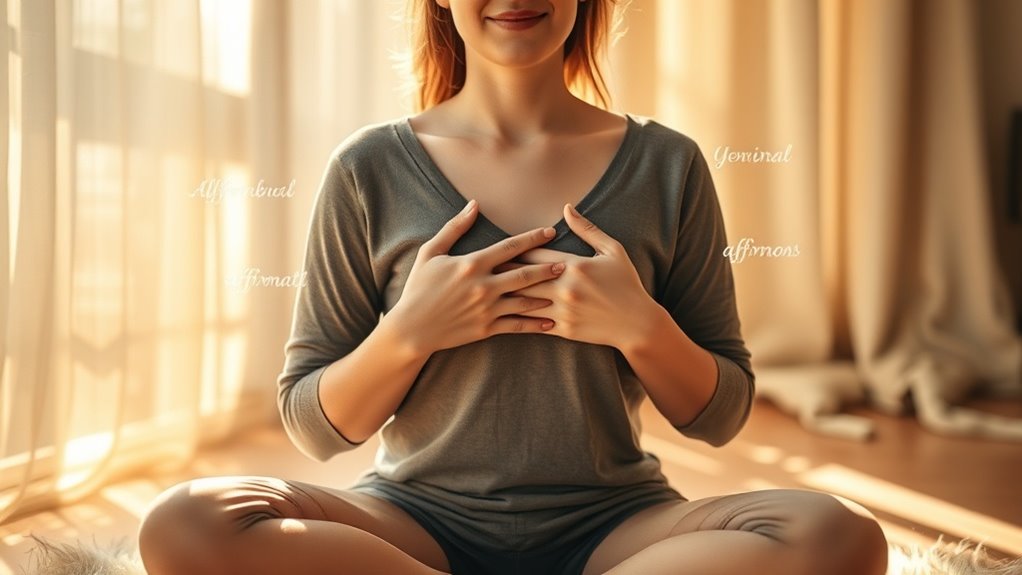
Using affirmations and mindful focus during your breathing exercises can considerably deepen your sense of calm by anchoring your attention in the present moment. When you silently repeat affirmations like “calm” or “safe,” you reinforce relaxation and shift focus away from anxious thoughts. Mindful focus involves paying close attention to bodily sensations—such as the rise of your chest or the feeling of air entering your nose—which enhances present-moment awareness and reduces stress. To maximize their impact, consider these strategies:
- Sync your affirmations with your breath—saying “calm” on inhalation and “peace” on exhalation—to deepen tranquility.
- Focus on sensory details, such as feeling the air entering your nostrils or the gentle movement of your abdomen.
- Maintain gentle awareness of your surroundings without judgment, grounding yourself in the here and now.
Together, affirmations and mindful focus create a positive mental association with relaxation, making it easier to calm your mind during stressful moments.
Tips for Making Breathing Techniques a Daily Routine
Making breathing techniques a consistent part of your daily routine can particularly enhance their calming effects. Establishing a routine helps your mind and body recognize when it’s time to relax, making the practice more effective over time. Dedicate a specific time each day, like morning or evening, for 5-10 minutes of controlled breathing. Incorporate these exercises into routine activities such as work breaks, commuting, or before bed, so it becomes a seamless part of your day. Using reminders or alarms on your phone can help prompt you until these sessions become habitual. Keeping a journal to track your progress allows you to see how regular practice influences your anxiety levels, reinforcing motivation. Creating a quiet, comfortable space free from distractions can make your routine more enjoyable and effective. Consistency is key—by making breathing techniques a daily routine, you’ll strengthen their calming power and better manage your anxiety.
Common Questions
How to Control Anxiety Through Breathing?
To control anxiety through breathing, start with simple breathing techniques like diaphragmatic or equal breathing, focusing on slow, deep breaths. Combine these with mindfulness exercises, paying attention to each inhale and exhale to stay present. This helps activate your parasympathetic nervous system, calming your mind and body. Regular practice builds resilience, making it easier to manage anxiety when it arises, promoting a sense of calm and emotional stability.
How to Calm Severe Anxiety?
Remember, calm seas never make a skilled sailor. To calm severe anxiety, focus on mindfulness exercises and relaxation techniques like slow diaphragmatic breathing, which activates your parasympathetic nervous system. Use controlled breathing patterns such as 4-7-8 or resonance frequency breathing to interrupt racing thoughts and lower adrenaline. Combining these with grounding methods like the 5-4-3-2-1 technique helps anchor you, gradually building resilience against intense anxiety episodes.
What Is the Most Serious Form of Anxiety?
The most serious form of anxiety is Panic Disorder, which involves unexpected panic attacks that can be overwhelming. You might experience intense physical symptoms like chest pain, rapid heartbeat, or dizziness, making you fear losing control. Unlike generalized anxiety, Panic Disorder can severely disrupt your life and lead to other issues like depression or avoidance behaviors. Professional treatment, including therapy and medication, is often necessary to manage these intense episodes effectively.
What Is the Strongest Natural Anti-Anxiety Medication?
The strongest natural anti-anxiety medication is mindfulness meditation, proven to lower cortisol levels and promote relaxation. Studies show regular practice can reduce anxiety symptoms by up to 40%. Herbal remedies like kava and valerian root also have calming effects, but their safety varies. Combining mindfulness with herbal supplements may enhance your mental well-being, providing a gentle, effective approach to managing anxiety naturally and empathetically.
To Sum it up
Just like a gentle tide eases the shore, your breath can soothe your mind. By embracing these controlled breathing techniques, you’re tapping into a ancient, reliable tool—your own breath—to find calm amidst chaos. Remember, even in busy moments, you hold the power to pause, breathe, and regain clarity. With patience and practice, you’ll discover that peace is always within reach—waiting quietly, like a quiet lighthouse guiding you home.