
Aligning movement with breathing activates your parasympathetic nervous system, promoting relaxation and reducing stress hormones. It enhances neural efficiency, stabilizes posture, and improves muscle control, leading to better physical performance and endurance. This synchronization also increases body awareness, sharpens focus, and supports emotional regulation, creating a balanced nervous system. Over time, these benefits strengthen resilience and overall well-being. Exploring this connection further reveals how consistent practice can optimize your mind and body function.
Key Takeaways
- Activates the parasympathetic nervous system, promoting relaxation and reducing stress hormones.
- Enhances neural efficiency and neuroplasticity, improving motor control and focus.
- Stabilizes the spine and improves posture through coordinated core engagement.
- Boosts oxygen delivery and muscular efficiency, supporting endurance and movement quality.
- Increases mindfulness and emotional regulation by fostering present-moment awareness and calmness.
The Science Behind Breath and Movement Synchronization
The science behind breath and movement synchronization reveals that coordinating inhalation and exhalation with physical actions activates the parasympathetic nervous system, which promotes relaxation and reduces stress hormones like cortisol. This process, known as breath-movement synchronization, enhances neural efficiency by optimizing the function of motor control areas in the brain. When your movement aligns with your breath, it improves proprioception, increasing your body awareness through more effective engagement of sensorimotor pathways. This synchronization fosters neuroplasticity, strengthening neural connections involved in motor coordination, focus, and emotional regulation. As your nervous system adapts, your ability to execute precise movements improves, supporting overall motor control and metabolic efficiency. The integration of breath and movement therefore not only reduces stress but also enhances the functional connectivity within the brain, facilitating neurophysiological adaptations that underpin improved physical and cognitive performance.
Enhancing Mental Clarity and Focus Through Rhythmic Practice
Engaging in rhythmic movement synchronized with breath can considerably enhance mental clarity and focus by activating neural pathways associated with attention and cognitive processing. This practice emphasizes breath awareness, allowing you to anchor your attention to the present moment, which reduces mental fog and improves concentration. Consistent rhythmic movement aligned with breathing fosters increased alpha brainwave activity, linked to relaxed alertness and mental sharpness. Such synchronization stimulates the parasympathetic nervous system, promoting calmness and a state conducive to sustained focus. Over time, this approach can markedly diminish mental fatigue and enhance attention span. By integrating rhythmic breath-movement exercises into your routine, you support neural efficiency and cognitive resilience, facilitating clearer thinking and better mental acuity. This systematic engagement with breath awareness and movement provides a reliable method to cultivate mental clarity and sharpen focus, both during activity and in daily life.
The Impact on Nervous System Regulation and Stress Reduction
Aligning movement with breathing activates the parasympathetic nervous system, fostering relaxation and reducing stress responses. This synchronization helps regulate cortisol levels and stabilizes heart rate variability, promoting emotional balance. Consistent practice enhances neurochemical release, supporting a resilient and calm nervous system.
Calms the Nervous System
When movement is synchronized with controlled breathing, it activates the parasympathetic nervous system, promoting relaxation and reducing stress responses. This breath-movement synchronization lowers cortisol levels, calming the body’s stress response. Controlled, deep breathing during movement decreases heart rate and blood pressure, supporting nervous system regulation. Consistent practice enhances vagal tone, improving resilience to stress and emotional stability. This alignment counteracts the fight-or-flight response, fostering calm and mental clarity.
| Effect | Mechanism | Outcome |
|---|---|---|
| Activation of parasympathetic system | Breath-movement synchronization | Relaxation, stress reduction |
| Reduction in cortisol levels | Deep, rhythmic breathing | Stress mitigation |
| Heart rate and blood pressure decrease | Controlled breathing | Nervous system regulation |
| Enhanced vagal tone | Regular practice | Emotional resilience |
| Counteracts fight-or-flight response | Movement-breath alignment | Mental clarity |
Activates Relaxation Response
Synchronizing movement with controlled breathing directly activates the body’s relaxation response, leading to effective nervous system regulation and stress reduction. When you breathe deeply in a synchronized breath pattern, it stimulates the parasympathetic nervous system, which promotes calmness and counteracts stress responses. This rhythmic breathing during movement lowers cortisol levels and reduces physiological markers such as heart rate and blood pressure. The coordinated effort enhances vagus nerve stimulation, further supporting nervous system balance and emotional calmness. Consistent practice of aligned movement with breath fosters resilience to stress and enhances mental clarity. By activating the relaxation response, this approach facilitates a state of physiological and psychological calm, making it an effective strategy for managing stress and improving overall nervous system regulation.
Promotes Emotional Balance
By coordinating movement with breath, you activate the parasympathetic nervous system, promoting relaxation and emotional stability. This breath-movement coordination enhances mindful awareness, allowing you to observe emotional responses without reactivity. Rhythmic breathing during movement decreases cortisol levels, supporting stress reduction and alleviating anxiety. Proper synchronization stabilizes heart rate variability, which underpins emotional resilience. Over time, consistent practice reinforces nervous system regulation, fostering sustained emotional balance. This process diminishes emotional reactivity by strengthening your capacity to manage stressors effectively. As relaxation deepens through mindful awareness, your mood improves, and resilience is enhanced. Ultimately, aligning breath with movement offers a physiological foundation for emotional stability, making it a crucial technique for stress management and well-being.
Improving Posture and Stability With Controlled Breathing
Controlled breathing plays a essential role in enhancing posture and stability during movement, as it stabilizes the spine and supports ideal alignment. When you breathe deliberately, it activates core muscles that maintain balance and prevent slumping or overcompensation. Deep, diaphragmatic breaths promote thoracic expansion, encouraging an upright and aligned body position. Coordinating your breath with movement engages stabilizer muscles, reinforcing overall stability. Regular practice reduces muscular tension, fostering sustainable, healthy posture. Visualize:
Controlled breathing activates core muscles, enhances posture, and stabilizes the spine during movement.
- The spine aligning naturally with each controlled inhale
- Core muscles engaging to support upright posture
- Stabilizer muscles activating during movement
- Muscular tension easing as breathing deepens
- Posture improving with consistent breath-movement synchronization
This process minimizes muscular tension and optimizes muscular engagement, leading to better posture and stability. By integrating controlled breathing into your movement routine, you reinforce proper alignment, reduce strain, and promote long-term musculoskeletal health.
Boosting Physical Performance and Endurance
Aligning your breath with movement markedly enhances physical performance and endurance by optimizing oxygen efficiency and muscular control. Breath-movement synchronization ensures that oxygen delivery matches muscular demands, reducing fatigue and extending performance duration. Proper coordination improves core stability, which is critical for maintaining proper form and minimizing injury risk during exertion. This synchronization supports efficient energy flow, enabling you to sustain effort over longer periods. Enhanced oxygen efficiency allows your muscles to operate more effectively, directly contributing to increased stamina. Additionally, aligning breath with movement sharpens focus and mental resilience, helping you push through physical barriers. By integrating breath-movement synchronization into your routine, you optimize muscular efficiency and core stability, leading to measurable improvements in endurance and overall performance. This precise control of breath and movement fosters a more efficient, resilient body capable of performing at higher levels for extended durations.
Cultivating Mindfulness and Emotional Balance
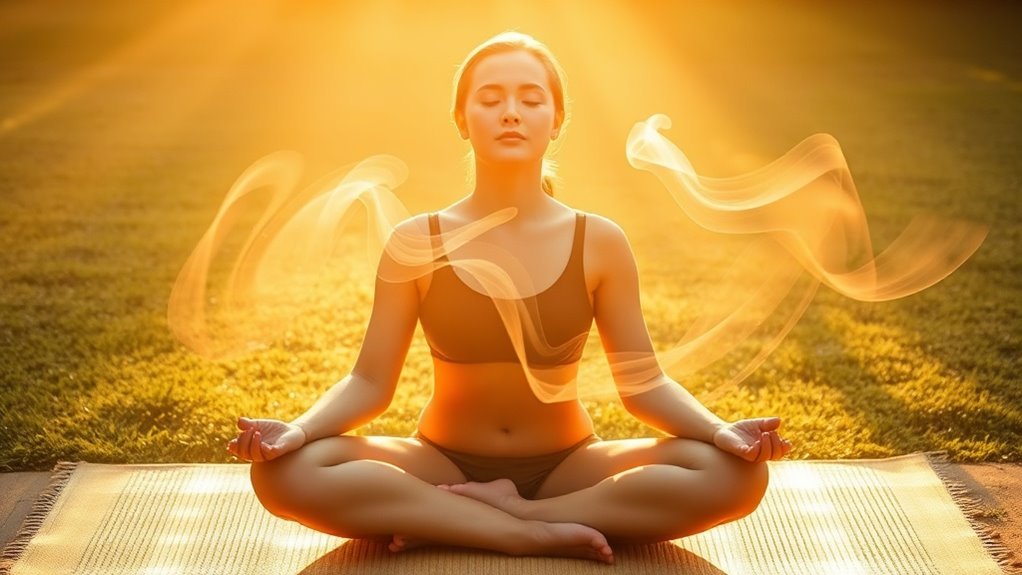
By aligning your breath with movement, you create an emotional anchor that enhances mindfulness and stabilizes emotional responses. This practice activates the parasympathetic nervous system, fostering a sense of inner calm. Regular integration supports improved emotional regulation and overall mental resilience.
Breath as Emotional Anchor
When you synchronize your breath with movement, it activates the parasympathetic nervous system, promoting emotional calmness and reducing stress levels. Using breath as an emotional anchor enhances mindfulness, allowing you to maintain focus amid fluctuating feelings. This practice supports emotional regulation by providing a stable point of reference during heightened states. Deep, controlled breathing during movement lowers cortisol levels, decreasing anxiety and emotional reactivity. It also fosters present-moment awareness, sharpening mental clarity and emotional stability. Consistent alignment of breath and movement strengthens the mind-body connection, building resilience against emotional fluctuations.
- Visualize a steady inhale supporting a smooth, flowing motion
- Feel tension dissolve as breath calms the nervous system
- Notice your awareness anchoring in each deliberate breath
- Sense emotional turbulence giving way to stability
- Experience heightened clarity through mindful breathing
Mindfulness Through Movement
Engaging in mindful movement practices such as slow yoga flows or deliberate walking enhances present-moment awareness by grounding attention in physical sensations and breath. Breath synchronization during these activities increases body awareness, fostering a deeper connection between mind and body. This heightened awareness supports emotional regulation by promoting a sense of stability and control, which can improve emotional resilience. Additionally, mindful movement activates the parasympathetic nervous system, contributing to stress reduction and mental clarity. Regularly integrating breath and movement cultivates a calm mental state, decreases anxiety, and enhances overall emotional balance. Through consistent practice, you develop a more refined capacity for emotional regulation, enabling you to manage stress more effectively and maintain mindfulness throughout daily activities.
Promoting Inner Calm
Aligning movement with breath actively engages the parasympathetic nervous system, promoting a state of calm and reducing stress levels. This process enhances mindful breathing, fostering present-moment awareness and emotional stability. Breath-movement alignment decreases cortisol levels, supporting emotional regulation and mental clarity. Regular practice cultivates inner calm and resilience to stress, reinforcing emotional balance. Visualize:
- Gentle waves of breath guiding slow, deliberate movements
- A serene mind amid rhythmic inhalation and exhalation
- Fluid motion harmonized with deep, mindful breaths
- Calmness radiating from focused breath and body awareness
- Steady, controlled movements reinforcing mental clarity
This integration deepens self-awareness, grounding you in emotional stability and fostering a sustained sense of inner peace. Consistent practice strengthens the connection between breath and movement, promoting overall well-being.
Techniques for Developing Consistent Breath-Movement Coordination
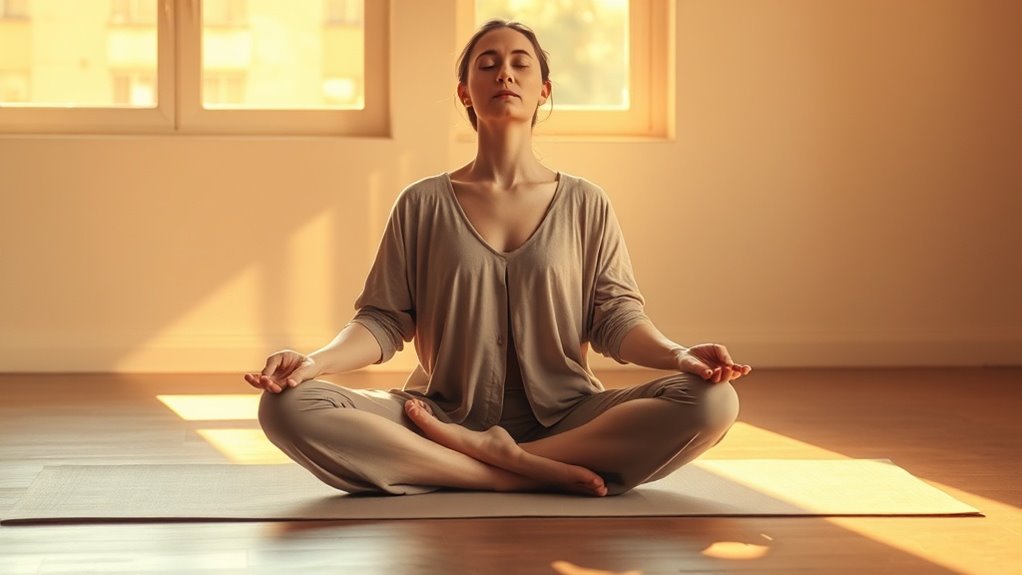
To develop consistent breath-movement coordination, it is essential to initiate each movement from a deep, diaphragmatic inhale, establishing a natural connection between breath and motion. Focus on mindful breathing to heighten awareness of how each inhale and exhale influences movement flow. Synchronization requires deliberate timing: inhale during the upward or opening phase, exhale during the downward or closing phase, maintaining consistency throughout practice. Use slow, deliberate repetitions of exercises such as bridge lifts or arm rotations to reinforce this connection, paying close attention to how each movement alters thoracic volume. Incorporate mindful pauses between repetitions to assess your breath-movement alignment, ensuring synchronization is sustained before progressing. Developing this awareness enhances the fluidity of movement, promotes efficiency, and solidifies the foundation for more advanced breath-movement integration. This focused approach cultivates precise control, bringing clarity and consistency to your practice.
Common Challenges and Strategies for Better Alignment
Many practitioners encounter difficulties in synchronizing breath with movement, particularly during complex or rapid sequences, often resulting in breath-holding or shallow breathing. Tension in the shoulders or neck can further disrupt breath-movement coordination, leading to inefficient airflow and uneven patterns. To improve alignment, focus on slow, deliberate movements that emphasize breath awareness, enabling better control and reducing tension. Incorporating cues that prompt initiating movement from the breath helps establish a consistent rhythm and reinforces foundational skills.
Consider these strategies to enhance coordination:
Enhance coordination by focusing on breath-linked movement and gentle tension release techniques.
- Visualize the breath as a guiding flow to synchronize with each movement
- Use gentle stretching to release tension in the neck and shoulders
- Practice simple exercises like bridge lifts or seated drills to build foundational skills
- Maintain awareness of breath during progressions between movements
- Focus on cues that encourage initiating movement from the breath’s natural rhythm
These techniques support improved breath-movement coordination and overall control.
Long-Term Benefits for Overall Well-Being and Resilience
When movement is consistently synchronized with breath, it can lead to significant long-term benefits for your overall well-being and resilience. This practice enhances the mind-body connection, fostering neuroplasticity that supports emotional regulation. By regularly engaging in breathing exercises aligned with movement, you optimize autonomic nervous system balance, which improves stress resilience over time. Additionally, sustained synchronization enhances lung capacity and diaphragmatic function, contributing to long-term respiratory health and endurance. Maintaining this mindful integration promotes physical stability and flexibility, reducing injury risk and supporting overall vitality. Over extended periods, these effects cultivate a calm, focused mental state, better equipping you to handle daily life challenges and emotional fluctuations. Consequently, consistent alignment of movement with breath not only improves immediate physical and mental function but also fortifies resilience and long-term health, establishing a foundation for sustained well-being.
Common Questions
What Happens When Your Breathing Hitches?
When your breathing hitches, diaphragm activation becomes inconsistent, impairing chest expansion and disrupting breath control. This affects respiratory muscles, leading to inefficient airflow optimization. As a result, oxygen delivery diminishes, causing symptoms like dizziness or mental fog. The irregular airflow also increases muscle tension, especially in the shoulders and neck, further limiting effective respiration. Maintaining steady breathing is essential for maximum oxygenation and minimizing physiological stress responses.
What Does Paradoxical Breathing Look Like?
Paradoxical breathing manifests as inward chest movement during inhalation, with outward abdominal expansion, reflecting poor diaphragm function and disrupted respiratory muscle coordination. You may notice less chest expansion and abnormal abdominal movement, especially during mouth breathing. This pattern indicates inefficient respiratory mechanics, often seen in respiratory conditions like COPD or anxiety. Recognizing this helps you understand how improper breathing patterns can compromise oxygen exchange and overall respiratory efficiency.
Can Being Out of Alignment Cause Breathing Problems?
Like a delicate balance on a tightrope, being out of alignment can cause breathing problems. Poor posture correction, especially when it hampers diaphragm engagement, reduces respiratory efficiency. To improve, incorporate mindfulness techniques and ergonomic adjustments, which help reestablish your breathing pattern. Proper alignment ensures your lungs expand fully, optimizing oxygen intake. When your body is aligned, it’s easier to breathe effortlessly, supporting overall respiratory health and reducing fatigue caused by inefficient breathing.
What Is Coordinated Breathing?
Coordinated breathing involves synchronizing your movement with breath awareness, emphasizing diaphragm activation during inhalation techniques and exhalation control. This practice engages respiratory muscles efficiently, enhancing oxygen delivery and stability. By aligning inhale and exhale phases with specific movement patterns, you optimize respiratory function, improve movement control, and foster mindfulness. Properly coordinated breathing supports overall physical performance and promotes relaxation through consistent, deliberate regulation of your breathing cycle.
To Sum it up
Aligning your movement with your breath is like tuning a finely crafted instrument—each component working in harmony to produce clarity and resilience. When you synchronize these elements, you create a steady rhythm that calms the nervous system, enhances focus, and improves posture. Over time, this deliberate practice strengthens your internal resilience, much like a well-tuned instrument endures the test of time. Consistent alignment fosters lasting well-being, transforming your body’s rhythm into a foundation of stability and health.