
Taking a short walk in nature can genuinely reset your mental clarity and boost focus. Even just 5 to 20 minutes outdoors helps regulate your mood, reduce stress, and calm mental fatigue. Green spaces slow rumination, promote neuroplasticity, and offer new perspectives. By immersing yourself fully—notice sounds, sights, and scents—you activate calming neural pathways. If you explore how nature benefits your brain, you’ll understand ways to incorporate these calming moments into your daily routine.
Key Takeaways
- Spending 90 minutes outdoors reduces cortisol levels and alleviates mental fatigue, improving mood and cognitive function.
- Short walks of 5-20 minutes sharpen focus, attention, and problem-solving skills through brief outdoor exposure.
- Nature activates neural pathways linked to creativity and new perspectives, supporting mental clarity and innovative thinking.
- Mindful engagement with natural sounds, sights, and scents during walks enhances relaxation and mental reset.
- Regular access to green spaces, even small ones, fosters neuroplasticity and resilience, promoting sustained mental clarity.
The Science Behind Nature’s Impact on Mental Clarity
Understanding how nature influences your mental clarity involves looking at the scientific evidence that supports it. Exposure to natural light plays a key role, as it helps regulate your body’s circadian rhythms, boosting mood and alertness. When you’re outdoors, your cortisol levels—those stress hormones—tend to decrease, which directly reduces feelings of mental fatigue. This decline in cortisol helps your brain reset, diminishing negative thoughts and restoring focus. Studies show that spending about 90 minutes in natural environments can considerably improve mood and cognitive function. Green spaces slow brain activity related to rumination, allowing your mind to refresh and regain clarity. Additionally, regular interaction with nature promotes neuroplasticity, encouraging neural growth and mental adaptability. By understanding these mechanisms, it becomes clear that nature isn’t just a pleasant escape; it’s a scientifically backed way to support mental resilience and clarity, helping you feel more centered and focused.
How Short Outdoor Walks Boost Cognitive Function
Even a quick 10-minute walk outside can sharpen your focus and boost attention, helping you feel more alert. These short breaks also reduce mental fatigue, making it easier to approach tasks with a clearer mind. Additionally, stepping into nature sparks creativity, opening new pathways for problem-solving and mental clarity.
Enhances Focus and Attention
Short outdoor walks, lasting just 5 to 20 minutes, can substantially sharpen your focus and attention. Spending time in green spaces provides sensory input that relaxes your mind, helping you regain mental clarity after stressful or digital-heavy periods. The natural environment stimulates brain activity in areas linked to concentration, improving your problem-solving skills and overall cognitive performance. When you step into a natural setting, your brain benefits from the calming influence of nature, which reduces mental fatigue and enhances your ability to stay attentive. These brief walks serve as a mental reset, allowing you to approach tasks with renewed clarity. By integrating outdoor walks into your routine, you tap into the power of green spaces to boost focus and sharpen your mind efficiently.
Reduces Mental Fatigue
When you take a brief outdoor walk, it can substantially lower cortisol levels, which are closely linked to mental fatigue. Spending time in nature acts as an effective mental health boost, helping you recover from cognitive overload. Even just 20 minutes outside can reduce feelings of mental fatigue by restoring your focus and mental clarity. These short walks improve your attention span and cognitive performance, making it easier to tackle tasks with a clearer mind. They also serve as a mental reset, alleviating mental blocks and reducing the effects of environmental and digital overload. By incorporating brief outdoor walks into your routine, you create a simple yet powerful way to combat mental fatigue and support your overall mental health.
Sparks Creative Thinking
Spending time in nature doesn’t just help clear your mind; it also ignites your creative thinking. Short outdoor walks in green space activate neural pathways linked to innovative ideas, boosting problem-solving skills and flexibility. When you step into natural environments, your brain engages sensory and mindfulness practices that foster spontaneous insights. Even just 5 to 20 minutes outside can markedly enhance cognitive function, allowing you to approach challenges with fresh perspectives. Nature’s calming influence reduces mental fatigue, making space for clearer thinking and deeper focus afterward. If you’re seeking inspiration or trying to overcome mental blocks, a brief walk in green space can reset your mental state and access new levels of creative thinking you might not reach otherwise.
The Role of Forest Therapy in Healing and Relaxation
Because our modern lives often leave us overwhelmed and disconnected, many find that immersing themselves in forest environments can be a powerful tool for healing and relaxation. Forest therapy, or shinrin-yoku, involves engaging your senses amid nature, which activates your parasympathetic nervous system—your body’s relaxation response. This process reduces heart rate, blood pressure, and cortisol levels, directly benefiting your mental health. Guided forest outings often include sensory awareness exercises, like noticing natural scents, sounds, and movements, deepening relaxation and mental clarity. The integration of indigenous shamanic practices highlights nature’s role as a source of wisdom and healing, aligning with scientific findings. By consciously engaging with natural elements, you support your body’s natural ability to recover from stress and restore mental balance.
| Natural Elements | Benefits for Relaxation |
|---|---|
| Scents | Reduce stress and enhance mood |
| Sounds | Calm the mind and improve focus |
| Movements | Foster mindfulness and grounding |
Incorporating Nature Into Daily Urban Routines
Integrating nature into your daily urban routine can be a practical way to maintain the mental clarity and relaxation benefits gained from forest therapy. Even short, 20-minute outdoor activities like walks in parks or strolling through city green spaces can markedly reduce cortisol levels and improve mental health. When you incorporate natural views, plants, or outdoor breaks into your day, you’re enhancing cognitive function and emotional well-being. Small green spaces—such as balcony gardens or city patches—offer accessible mental health benefits when used consistently. Regular exposure to nature helps your brain adapt and reset more effectively by supporting neuroplasticity. By making nature a regular part of your urban life, you can combat mental fatigue, boost creativity, and foster a sense of calm amid the city’s hustle. These small, mindful interventions are practical steps toward sustaining mental clarity and resilience in a busy, urban environment.
Environmental Factors That Enhance Mental Well-Being
Your access to natural environments can substantially boost your mental well-being, even with small parks or green spaces nearby. These areas help lower stress hormones and promote relaxation, making them especially valuable in urban settings. Unfortunately, not everyone benefits equally, as socioeconomic factors can influence access to these restorative spaces.
Access to Natural Environments
Access to natural environments plays a crucial role in supporting mental well-being, especially in urban settings where stress and overstimulation are common. When you have access to green spaces, you’re more likely to experience a 12% reduction in mortality risk and lower rates of depression. Even small urban parks can provide notable mental health benefits if they offer a sense of escape and natural focus. Here are some ways access impacts you:
- Natural settings reduce stress and promote relaxation.
- Green spaces encourage physical activity, boosting mood.
- Access to parks helps bridge social gaps, supporting community well-being.
- Limited green access correlates with higher chronic disease and health disparities.
Improving equitable access to natural environments can considerably enhance your overall mental health and resilience.
Socioeconomic Environmental Equity
While green spaces are essential for mental well-being, socioeconomic disparities often create significant barriers to equitable access, disproportionately affecting marginalized communities. Limited access to parks in low-income areas correlates with higher rates of mental health issues and chronic diseases. Communities of color are nearly three times more likely to lack green space, deepening health inequities. Addressing this divide through policy and community investments can promote mental health and social justice.
| Socioeconomic Status | Access to Green Spaces | Mental Health Impact |
|---|---|---|
| Low-income | Limited or none | Increased stress, anxiety |
| Middle-income | Moderate access | Improved well-being |
| Affluent | Abundant access | Enhanced mental resilience |
| Marginalized Groups | Significant barriers | Greater health disparities |
Practical Tips for Maximizing Benefits From Nature Walks
To truly maximize the mental benefits of nature walks, it’s important to approach each outing with intention and awareness. Engaging fully with the natural environment amplifies relaxation and mental clarity. Here are some practical tips:
- Aim for at least 20-minute walks in diverse outdoor settings—parks, trails, or gardens—to deepen sensory engagement.
- Practice mindfulness by noticing sounds, scents, and visual details, which helps reset your mind and reduces stress.
- Reduce distractions by leaving digital devices behind or silencing notifications, allowing you to immerse yourself fully.
- Establish a regular schedule for outdoor activity; consistency sustains improvements in focus, creativity, and emotional balance.
Applying these strategies transforms a simple walk into a powerful tool for mental clarity, making nature your ally in achieving emotional well-being.
The Connection Between Green Spaces and Brain Plasticity
Spending time in green spaces doesn’t just refresh your mood; it actively influences how your brain adapts and rewires itself. Exposure to natural environments promotes neuroplasticity—your brain’s ability to grow and reorganize—by stimulating neural growth and enhancing adaptability. This process supports mental resilience, helping you bounce back from stress and cognitive fatigue. Scientific research shows that nature can shape brain structure, improving learning and memory functions. Indigenous shamanic rituals utilizing natural elements highlight how nature historically fostered mental expansion and neural reorganization. Modern neuroimaging reveals that time in green spaces reduces activity linked to rumination, allowing your mind to reset. Understanding this connection underscores why regular interactions with nature are essential for maintaining brain flexibility and mental health.
| Green Spaces | Brain Plasticity |
|---|---|
| Promote neural growth | Support adaptability |
| Enhance cognitive flexibility | Strengthen mental resilience |
| Influence brain structure | Improve learning & memory |
| Reduce rumination | Facilitate mental reset |
Community Strategies to Make Nature Accessible for All
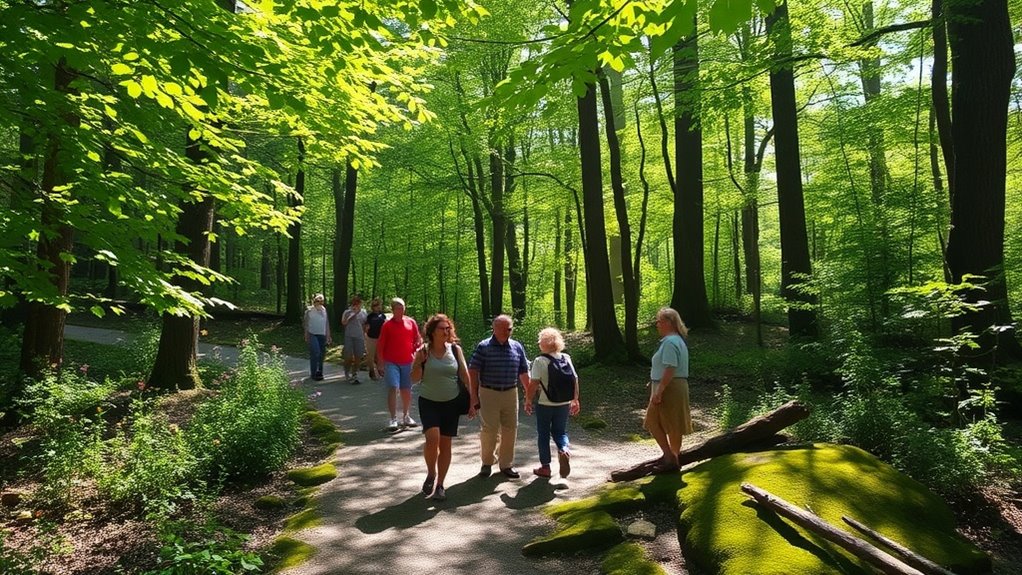
Ensuring that everyone has access to nature requires intentional community strategies that address existing disparities. When green spaces are equitable, residents enjoy reduced health disparities and improved well-being. To achieve this, consider these approaches:
- Invest in park renovations and green corridors in underserved neighborhoods to boost community access.
- Support policies and funding dedicated to urban green space development, ensuring all communities benefit.
- Engage local residents in planning efforts, fostering community-led initiatives that reflect their needs.
- Promote partnerships between city officials, nonprofits, and residents to maintain and expand accessible green spaces.
Common Questions
Are Nature Walks Good for Mental Health?
Yes, nature walks are excellent for mental health. They offer mental rejuvenation by reducing stress and negative thoughts, while sensory engagement with nature calms your mind. Spending time outdoors can boost your mood, improve focus, and strengthen emotional regulation. Even a short walk helps alleviate mental fatigue, making it a simple, effective way to nurture your mental well-being and find renewed clarity amidst daily challenges.
Does Walking Help With Mental Clarity?
Walking in nature is like opening a secret portal to clarity. It’s truly transformative for your mind, offering powerful cognitive enhancement and stress reduction. Engaging in a mindfulness practice during your walk helps slow racing thoughts, fostering mental calmness and focus. This simple activity resets your mental state, sharpening your thinking and boosting overall well-being, making it an essential tool for anyone seeking mental clarity amid daily chaos.
What Is the 20 5 3 Rule for Nature?
The 20-5-3 rule encourages you to spend 20 minutes in nature, three times a week, as a mindfulness practice that boosts mental clarity. It promotes environmental awareness and sensory engagement, helping you connect deeply with your surroundings. This simple approach makes it easier to experience the benefits of nature regularly, reducing stress, improving mood, and fostering neural flexibility—all while fitting into your busy schedule.
Does Nature Reset Your Nervous System?
Yes, nature does reset your nervous system by promoting stress reduction through sensory engagement. When you spend time outdoors, your body shifts from stress-induced sympathetic activity to calming parasympathetic dominance. This process enhances emotional resilience, helping you better manage daily stressors. Engaging with natural environments calms your mind, lowers cortisol levels, and fosters a balanced mental state, making it an effective way to restore your nervous system’s natural equilibrium.
To Sum it up
By making nature walks a daily habit, you’re not just clearing your mind—you’re revealing superpowers your brain never knew it had. Imagine transforming chaos into calm, confusion into crystal-clear focus, all with a simple step outside. It’s almost too good to be true, but the science backs it up. So, take that walk—your mind’s greatest reset button—and experience a mental clarity so profound, it’s like discovering a secret shortcut to happiness and peace.