
Reducing blue light exposure in the evening helps you sleep better by preserving melatonin production and maintaining your circadian rhythm. Blue light suppresses melatonin by up to 60%, delaying sleep onset and disrupting sleep cycles. Using blue light filters, night modes, or wearing glasses with amber lenses can minimize this effect. Light management improves sleep quality, increasing REM sleep and overall restfulness. Stay tuned to learn effective strategies for creating a sleep-friendly environment free of blue light.
Key Takeaways
- Reducing blue light exposure increases melatonin production, facilitating easier sleep onset.
- Limiting blue light from screens and lighting helps maintain circadian rhythm alignment.
- Using blue light filters or glasses in the evening can improve sleep quality.
- Dimming indoor lights and avoiding screens 2-3 hours before bed promotes restful sleep.
- Lower blue light exposure enhances sleep duration and reduces sleep disruptions.
Understanding Blue Light and Its Impact on Sleep
Blue light is a high-energy visible wavelength that markedly influences alertness, hormone production, and circadian rhythms. It plays a vital role in regulating your internal clock by signaling wakefulness and sleep-wake cycles. During daytime, blue light exposure from natural sources enhances mood, reaction time, and cognitive performance, supporting ideal functioning. However, artificial lighting and screens emit significant blue light, which can interfere with melatonin production—the hormone responsible for initiating sleep. When blue light reaches your eyes, it suppresses melatonin secretion, making it harder to fall asleep and disrupting your circadian rhythms. This disruption can lead to delayed sleep onset and reduced sleep quality, especially when exposure occurs in the evening or at night. Understanding the impact of blue light on your body’s biological processes highlights the importance of managing blue light exposure, particularly during evening hours, to maintain healthy sleep patterns and circadian rhythm synchronization.
How Blue Light Disrupts Melatonin Production
Exposure to blue light in the evening directly impacts your body’s ability to produce melatonin, the hormone responsible for signaling sleep onset. Blue light suppresses melatonin secretion by inhibiting the activation of the pineal gland, which disrupts your circadian rhythm. Studies demonstrate that blue wavelengths can reduce melatonin levels by up to 60% compared to darkness, leading to significant sleep disruption. This suppression can last several hours, delaying sleep onset and decreasing sleep quality. To understand this process further, consider:
Blue light in the evening can reduce melatonin by up to 60%, disrupting sleep quality and onset.
- Blue light inhibits melatonin synthesis, impairing the natural sleep-wake cycle.
- Reduced melatonin levels extend the time it takes to fall asleep, affecting overall sleep duration.
- Consistent exposure during evening hours can cause chronic circadian misalignment, further degrading sleep quality.
Using blue-light-blocking glasses or enabling night mode features can help mitigate these effects, supporting healthier melatonin production and improved sleep.
Common Sources of Blue Light in Daily Life
You are exposed to blue light primarily through electronic device screens like smartphones, tablets, computers, and TVs, which emit significant levels of this wavelength. Artificial lighting, including LED and fluorescent bulbs used in homes and workplaces, also contributes substantially to daily blue light exposure, especially during evening hours. Managing this exposure with features like night mode or blue light filters can help mitigate potential disruptions to sleep cycles.
Electronic Device Screens
Have you ever wondered how much time you spend staring at screens each day? Electronic device screens—smartphones, tablets, computers, and TVs—are primary sources of blue light exposure. These devices emit high levels of blue light that can markedly disrupt your sleep by suppressing melatonin production. This interference delays sleep onset and diminishes sleep quality. Furthermore, prolonged evening exposure can shift your circadian rhythm by roughly three hours, making it harder to fall asleep naturally. To mitigate these effects, using built-in features like night mode or blue light filtering apps can reduce blue light emissions. Implementing strategies such as limiting screen time at least one to two hours before bed and taking regular breaks with the 20-20-20 rule supports healthier sleep patterns and maintains circadian rhythm stability.
Artificial Lighting Sources
Artificial lighting sources, particularly LED lighting and fluorescent lights found in homes, offices, and public spaces, markedly contribute to daily blue light exposure. These artificial lighting systems emit wavelengths that can interfere with circadian rhythms, especially when used during evening hours. Energy-efficient LED lighting, while beneficial for sustainability, often has higher blue light output compared to traditional bulbs. Fluorescent lights, common in commercial settings, also contribute to increased blue light exposure. This is particularly relevant given the prevalence of screen time, as the combined effect of artificial lighting and electronic device emissions can disrupt sleep patterns. Reducing exposure to these sources in the evening is essential for maintaining healthy circadian rhythms and improving sleep quality. Managing artificial lighting is a key step toward better sleep hygiene.
Indoor Light Exposure
Indoor environments are significant sources of blue light exposure due to the widespread use of LED and fluorescent lighting, as well as electronic devices such as smartphones, tablets, computers, TVs, and gaming consoles. These sources emit substantial blue wavelengths that can disrupt circadian rhythms when exposure occurs during evening hours. Especially artificial indoor lighting, particularly energy-efficient bulbs, contributes heavily to blue light levels. To mitigate this, many devices now incorporate blue light filters or “night mode” settings that reduce blue wavelength emissions. Proper management of indoor light exposure is essential for maintaining melatonin production and sleep quality. Strategies such as using dimmer lighting, minimizing screen time before bed, and employing blue light filters can help preserve circadian alignment and enhance sleep health.
The Effects of Blue Light on Your Circadian Rhythm
Blue light influences your circadian rhythm by activating specialized retinal cells known as intrinsically photosensitive retinal ganglion cells (ipRGCs), which send signals to the brain’s internal clock. This process modulates circadian rhythm regulation, as blue-wavelength light suppresses melatonin production, the hormone responsible for signaling sleep onset. Evening exposure to blue light interferes with this natural process, delaying melatonin release and shifting sleep timing. Natural sunlight, containing blue light, helps entrain your circadian clock by promoting alertness during the day and sleepiness at night. Conversely, artificial blue light sources, such as screens and LED lighting, can alter circadian rhythm by approximately three hours if exposure occurs late in the day. Maintaining proper management of blue light exposure in the evening is vital for circadian alignment, ensuring that melatonin is produced at appropriate times to facilitate healthy sleep patterns. Reducing blue light exposure in the evening supports a more synchronized circadian rhythm and better sleep quality.
Strategies to Minimize Blue Light Exposure Before Bedtime
Implementing night mode settings or dimming indoor lighting at least two hours before sleep can considerably reduce blue light exposure, supporting melatonin synthesis. These adjustments help maintain your circadian rhythm and improve sleep quality. Employing such strategies is essential for aligning environmental cues with natural biological processes.
Use Night Mode
Activating night mode on devices is an effective strategy to reduce blue light exposure before bedtime. Night mode decreases screen brightness and shifts display colors toward pink and red, considerably lowering blue light emission. This adjustment helps prevent disruption of melatonin production, which is essential for regulating sleep cycles. Implementing night mode can enhance sleep quality by minimizing alertness caused by blue light. To maximize benefits, consider these strategies:
- Enable night mode consistently in the evening to maintain circadian rhythm alignment.
- Adjust screen brightness settings to complement night mode’s color shift.
- Use devices with red light filters or dedicated apps that simulate natural lighting conditions.
These measures support better sleep hygiene and reduce eye strain, contributing to more restful sleep.
Dim Lights Before Bed
Dimming lights in the hours leading up to bedtime is an evidence-based strategy that supports the natural regulation of your circadian rhythm. Exposure to dim light, especially warm-colored lights like red or orange, reduces blue light exposure that suppresses melatonin production. Lower light levels signal to your body that it’s time to wind down, facilitating the release of melatonin essential for sleep onset. Using dimmer switches or smart lighting controls allows you to gradually decrease light intensity, reinforcing your circadian rhythm and improving sleep quality. Avoiding bright, blue-enriched illumination before bed helps prevent melatonin suppression, making it easier to fall asleep and stay asleep. This simple intervention aligns your environment with your biological clock, promoting healthier sleep patterns.
Benefits of Using Night Mode and Blue Light Blocking Devices
Using night mode and blue light blocking devices offers scientifically supported benefits that can substantially improve your sleep quality and reduce digital eye strain. These tools markedly decrease blue light exposure—up to 90%—which minimizes disruption to your circadian rhythms. By activating night mode, screen brightness diminishes, and colors shift toward pink and red, helping to preserve melatonin levels similar to darkness. Blue light blocking glasses further reinforce this effect, maintaining melatonin production and promoting natural sleep cues. Research indicates that these interventions lead to:
- Reduced sleep latency and increased REM sleep duration.
- Preservation of circadian rhythm integrity, preventing disruption.
- Decreased digital eye strain, improving comfort and visual clarity.
Implementing night mode or blue light blocking devices before bedtime helps your body better recognize sleep signals, fostering deeper, more restorative sleep. These measures are effective, evidence-based strategies for mitigating the adverse effects of blue light exposure at night.
Creating a Sleep-Friendly Environment Free of Blue Light
Creating a sleep-friendly environment free of blue light is essential for optimizing circadian rhythm alignment and improving sleep quality. Exposure to blue light in the evening suppresses melatonin production, disrupting the natural sleep-wake cycle. To mitigate this, you should turn off electronic devices and dim lights two to three hours before bed, signaling to your brain that it’s time to rest. Using blackout masks or installing red/orange lights in your bedroom minimizes blue light exposure and creates a dark, sleep-conducive environment. Incorporating light filters on screens further reduces blue light transmission, supporting melatonin synthesis. Establishing a routine that avoids screens helps maintain circadian rhythm synchronization, which enhances sleep onset and duration. These environmental adjustments signal to your brain that it’s time to wind down, fostering a more consistent sleep pattern and higher sleep quality. Maintaining a dark, low-blue-light sleep environment is a scientifically supported strategy for healthier sleep.
Scientific Evidence Supporting Blue Light Reduction for Better Sleep
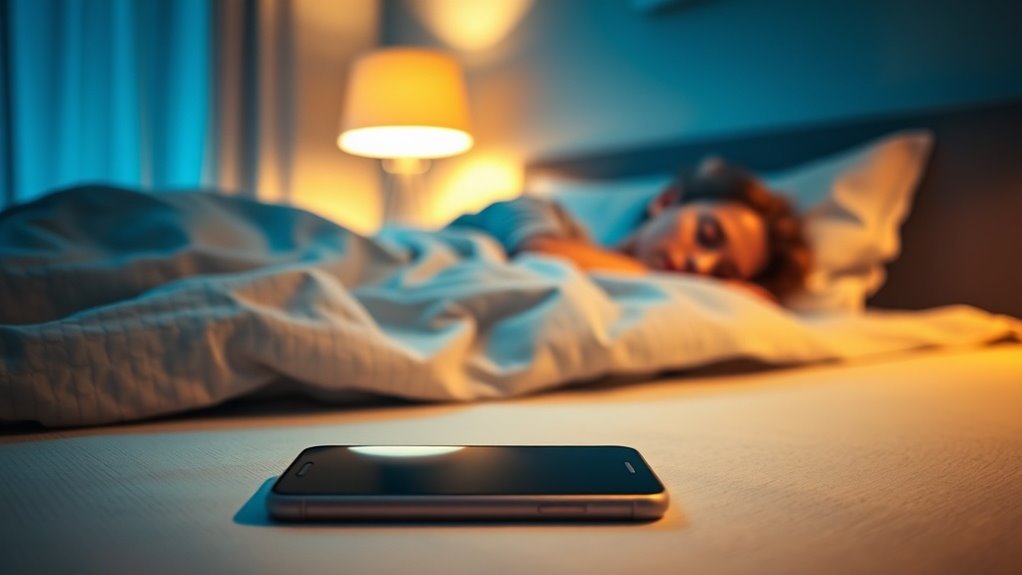
Numerous scientific studies have demonstrated that blue light exposure markedly affects sleep physiology by suppressing melatonin production. Blue light can reduce melatonin levels by up to 50% more than other wavelengths, leading to significant disruptions in sleep quality. Research indicates that exposure to blue light can shift circadian rhythms by approximately three hours, delaying sleep onset and impairing overall sleep architecture.
Key evidence includes:
- Wearing blue-light-blocking glasses during evening hours maintains melatonin levels comparable to darkness, thereby supporting natural sleep processes.
- Light exposure from screens and artificial sources prior to bedtime correlates with longer sleep latency and reduced REM sleep duration.
- Multiple clinical trials confirm that reducing blue light exposure enhances sleep quality by stabilizing circadian rhythms and promoting earlier sleep onset.
This body of evidence underscores the importance of minimizing blue light, especially before bed, to optimize melatonin production and improve sleep health.
Practical Tips for Maintaining Healthy Light Habits
To promote healthy light habits and support ideal sleep, it’s essential to implement practical strategies that minimize blue light exposure before bedtime. Limiting device usage and dimming lights at least 2-3 hours in the evening reduces blue light exposure, allowing melatonin production to occur naturally. Using blue light blocking glasses or amber-tinted lenses during evening hours can further prevent melatonin suppression, aiding sleep better. Enabling “night mode” or blue light filters on smartphones, tablets, and computers adjusts screen emissions, decreasing blue light exposure during critical pre-sleep periods. Incorporating red or orange lighting in your bedroom or reading areas creates an environment that minimizes blue light emissions, fostering natural circadian rhythms. Additionally, employing apps like f.lux or Night Shift automatically adjusts screen colors based on sunset times, supporting healthier light habits. These evidence-based tips help optimize melatonin levels and improve sleep quality by reducing blue light exposure during the evening.
Common Questions
Does Reducing Blue Light Help Sleep?
Reducing blue light exposure considerably improves sleep by minimizing melatonin suppression, which helps regulate your circadian rhythm. Electronic devices emit blue light that disrupts sleep quality and causes eye strain; limiting this exposure allows your melatonin levels to rise naturally. This leads to faster sleep onset, deeper rest, and fewer sleep disturbances. Implementing blue light reduction strategies, such as glasses or screen filters, is a proven way to enhance overall sleep health.
How Long Before Bed Should You Cut Out Blue Light?
To protect your circadian rhythm, cut out blue light from electronic devices at least 2 to 3 hours before bed. Screen time and bedroom lighting that emit blue wavelengths can cause melatonin suppression, disrupting sleep hygiene. This early cutoff gives your body a chance to restore melatonin levels naturally, ensuring restful sleep. Minimizing blue light exposure during this window supports better sleep onset, duration, and overall sleep quality.
Can Blue LED Light Disrupt Sleep?
Blue LED light can disrupt your sleep by suppressing melatonin production, which affects your circadian rhythm. This suppression delays sleep onset and reduces sleep quality. Additionally, blue light increases visual alertness and can cause eye strain, further impacting rest. Excessive blue light exposure, especially in the evening, disrupts your natural biological clock. Limiting exposure or using blue-light filters helps maintain circadian rhythm integrity, improving sleep and reducing eye strain.
What Does Blue Light Do When You Sleep?
When you sleep, blue light can still impact your body, mainly by causing melatonin suppression, which disrupts your circadian rhythm and delays sleep onset. It may also contribute to eye strain and affect retina health over time. The hormonal impact can reduce sleep quality, leaving you tired. To avoid this, minimize blue light exposure before bed, helping your body reset naturally and ensuring restful, restorative sleep.
To Sum it up
By reducing your blue light exposure before bed, you can substantially improve melatonin production and stabilize your circadian rhythm. Implementing strategies like night mode, blue light filters, and limiting screen time isn’t just convenient—it’s backed by scientific evidence to enhance sleep quality. Don’t you owe it to yourself to prioritize restorative sleep? Making these adjustments can lead to better health, mood, and cognitive function—so why not start tonight?