
Managing your screen time, especially before bed, is vital for better sleep. Blue light from screens suppresses melatonin, delaying sleep onset, while stimulating content and notifications fragment sleep cycles. Establishing a calming, device-free routine 30–60 minutes before sleep, using blue light filters, and setting screen limits can greatly improve sleep quality. If you want to understand how to create an effective bedtime routine and optimize your sleep by reducing screen exposure, keep exploring these strategies.
Key Takeaways
- Reducing blue light exposure 30–60 minutes before bed enhances melatonin production and promotes quicker sleep onset.
- Turning off screens and removing devices from the bedroom minimizes distractions and sleep disruptions.
- Establishing consistent sleep routines and engaging in calming activities improve sleep quality and duration.
- Limiting daily screen time and taking regular breaks reduce eye strain, mental fatigue, and blue light impact.
- Recognizing signs of sleep disruption helps adjust device habits, leading to healthier sleep patterns and better rest.
Understanding How Blue Light Disrupts Sleep
Blue light from screens can profoundly disrupt your sleep cycle because it suppresses melatonin production, the hormone essential for initiating sleep. Research shows that exposure to artificial blue light in the evening reduces melatonin levels, making it harder for you to fall asleep naturally. While sunlight contains approximately 25% blue light, it helps regulate your circadian rhythm. In contrast, screens emit blue light at higher intensities, which tricks your brain into thinking it’s daytime. This suppression delays sleep onset and diminishes sleep quality. When melatonin production is inhibited, your body struggles to *shift* into restful sleep, leading to increased wakefulness and poorer overall rest. To mitigate these effects, consider using blue light filters or glasses during evening screen time. Understanding this mechanism underscores the importance of managing screen exposure to protect your melatonin levels and promote healthier sleep patterns.
The Impact of Screen Content and Notifications on Rest
Notifications and vibrations can trigger arousal and fragment sleep, decreasing its restorative quality. Stimulating content before bed activates the brain, delaying sleep onset and impairing overall rest. Even silent notifications and emotionally charged material can increase mental alertness, disrupting sleep continuity.
Disruptive Alert Triggers
Disruptive alert triggers from screens—such as notifications, vibrations, and sounds—can notably impair sleep quality by causing micro-awakenings and fragmenting rest. Research shows that even subtle alerts during the night increase the likelihood of waking, reducing overall sleep efficiency. Notifications activate the brain, making it harder to shift into deep sleep stages, while vibrations and sounds disturb your natural sleep cycles. The presence of alerts in your bedroom environment correlates with more frequent awakenings and decreased sleep duration. Disabling notifications and alerts before bedtime is proven to substantially minimize these disruptions, allowing for more continuous, restorative sleep. Managing alert triggers is thus essential for protecting sleep quality and ensuring you wake feeling refreshed.
Stimulating Content Effects
Stimulating content on screens—such as fast-paced videos, social media feeds, and interactive games—can considerably hinder your ability to wind down for sleep. This type of content activates your brain, increasing alertness and delaying sleep onset. Additionally, light exposure from screens, even when the content is muted, disrupts the production of melatonin, the hormone responsible for regulating sleep-wake cycles. Engaging visuals and cognitive stimulation from stimulating content interfere with your body’s natural sleep signals, making it harder to relax. Continuous exposure to such content before bed not only prolongs sleep latency but also fragments sleep cycles, reducing overall sleep quality. To improve rest, limit stimulating content and minimize light exposure from screens at least an hour before bedtime.
Notification Distractions During Sleep
Even subtle pings and alerts from your devices during sleep can activate your brain’s alert systems, leading to fragmented rest and reduced overall sleep quality. Notifications—such as vibrations, sounds, or flashing alerts—disrupt the natural progression into deep sleep stages, increasing wakefulness and making it harder to fall back asleep. Continuous alerts and message notifications during sleep have been linked to daytime fatigue and lower sleep satisfaction. To minimize these effects:
- Keep devices in silent or Do Not Disturb mode
- Disable non-essential notifications before bed
- Use vibration or silent alerts only
- Remove devices from the bedroom if possible
- Rely on traditional alarm clocks instead of phones
Managing notification settings is essential for promoting uninterrupted, restorative sleep and improving overall sleep quality.
Setting Boundaries: Creating a Tech-Free Bedtime Routine
Creating a consistent, tech-free bedtime routine is essential for promoting better sleep quality. Establishing clear boundaries helps your brain associate the pre-sleep period with relaxation, not stimulation. Turn off all screens at least 30 to 60 minutes before sleep, and designate a tech-free zone in your bedroom by removing devices like phones and tablets. Replace screen time with calming activities such as reading, listening to soothing music, or practicing meditation. Use dim lighting or amber bulbs to signal winding down. Consistent bedtimes and wake-up times reinforce your sleep schedule and reduce the urge to check devices late at night. Consider the following to support your routine:
| Step | Action | Benefits |
|---|---|---|
| Screen cutoff | Turn off screens 30-60 mins before bed | Enhances melatonin production |
| Tech-free zone | Remove devices from bedroom | Reduces temptation |
| Relaxing activity | Engage in reading or meditation | Promotes relaxation |
| Lighting | Use dim or amber bulbs | Signals sleep readiness |
| Consistent schedule | Set fixed sleep and wake times | Reinforces healthy habits |
Practical Strategies to Limit Screen Use Before Sleep
To effectively limit screen use before sleep, implementing practical strategies can make a significant difference in improving your sleep quality. Reducing screen time at least 30 to 60 minutes before bed helps minimize blue light exposure, which can suppress melatonin production. Replace screen time with relaxing activities such as reading a book, journaling, or gentle stretching to create a calming bedtime routine. Consider using blue light filters or night mode on devices if screen use cannot be avoided. Keep devices charged outside the bedroom to prevent nighttime notifications from disrupting your sleep. Establishing a consistent, tech-free routine signals your body that it’s time to wind down, reinforcing healthy sleep habits. These strategies are supported by research emphasizing the importance of minimizing screen use before sleep to enhance sleep duration and quality, ultimately fostering better overall health. Incorporating these habits into your bedtime routines will help you sleep more soundly.
The Benefits of Replacing Screens With Relaxing Activities
Replacing screens with relaxing activities before bed can substantially enhance sleep quality and duration. Research indicates that engaging in calming routines, such as reading a physical book or practicing meditation, reduces exposure to blue light, which suppresses melatonin production. This hormone is vital for regulating sleep, and minimizing its disruption leads to faster sleep onset and more restorative sleep cycles. Studies show that substituting screen time with relaxing activities decreases nighttime awakenings and promotes a more consistent sleep schedule. These calming practices also lower stress levels, further supporting deep, uninterrupted sleep. By intentionally replacing screens with relaxing activities, you create an environment conducive to sleep, enabling your body to wind down naturally. Consistent engagement in such routines not only improves sleep quality but also fosters overall well-being, making restful nights more attainable and daytime alertness more sustained.
Tips for Managing Overall Screen Time During the Day
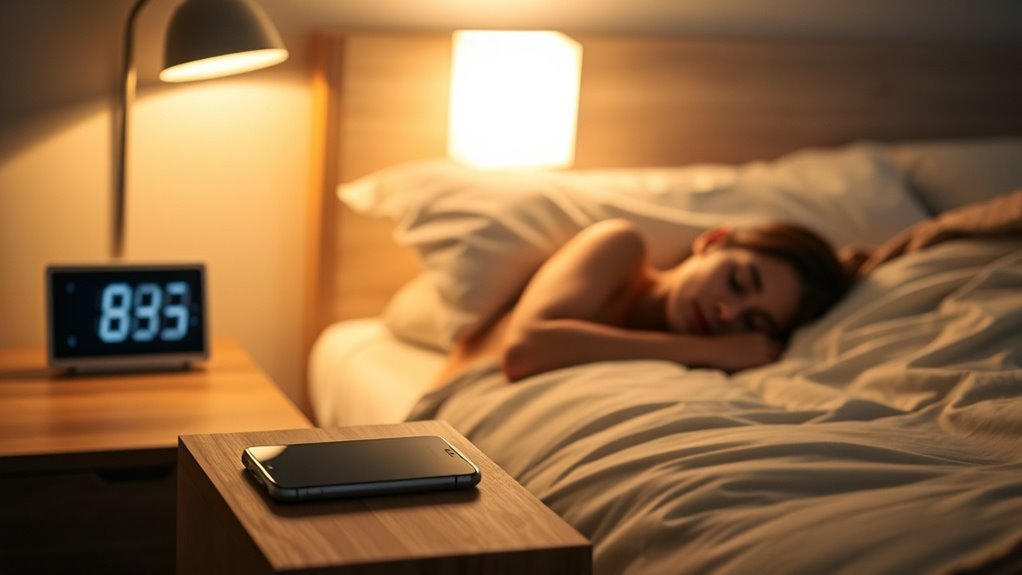
Effective management of daily screen time involves setting clear limits and incorporating regular breaks to minimize eye strain and fatigue. Encouraging outdoor activities and physical exercise reduces reliance on screens, supporting better sleep hygiene. Applying practical strategies like predefined time boundaries and promoting outdoor engagement can markedly improve overall screen habits.
Set Daily Limits
Setting daily screen time limits is a proven strategy for reducing overall usage and enhancing sleep quality. When you enforce these limits, you help prevent excessive screen exposure that can interfere with sleep hygiene. Use device settings or apps to establish clear boundaries, ensuring you stay within recommended guidelines—such as the American Academy of Pediatrics’ two-hour limit for children. Regularly monitor your daily screen use and adjust based on your needs. This approach minimizes eye strain, reduces mental fatigue, and promotes better sleep hygiene. Visualize your day with these practices:
- Using parental controls or app timers to enforce limits
- Setting specific start and end times for screen use
- Prioritizing offline activities during the day
- Tracking your total daily screen time
- Adjusting limits to improve sleep and overall well-being
Incorporate Screen-Free Breaks
Incorporating screen-free breaks throughout the day is a proactive approach to managing overall screen time and safeguarding sleep quality. Research shows that taking breaks every three to four hours reduces eye strain and mental fatigue, which can positively influence your sleep patterns. Short, screen-free activities like stretching, walking, or reading not only refresh your focus but also promote better mental well-being. The 20-20-20 rule—looking at something 20 feet away for 20 seconds every 20 minutes—effectively minimizes eye discomfort and blue light exposure, supporting healthier sleep cycles. Scheduling regular periods without screens during the day decreases overall blue light exposure and helps regulate your sleep patterns, making it easier to fall asleep and stay asleep at night.
Promote Outdoor Activities
Engaging in outdoor activities is one of the most effective strategies for reducing overall screen time during the day. Spending time outdoors exposes you to natural light, which helps regulate circadian rhythms and enhances sleep quality. Replacing screen time with outdoor sports, walks, or recreational activities not only promotes physical health but also supports mental well-being. Setting daily outdoor time goals, such as one hour of unstructured play, can create a healthy balance and improve sleep habits.
Imagine:
- Playing sports in a local park
- Taking brisk walks in natural settings
- Gardening or yard work
- Exploring trails or bike paths
- Participating in outdoor games with friends
Recognizing the Signs of Sleep Disruption Related to Device Use
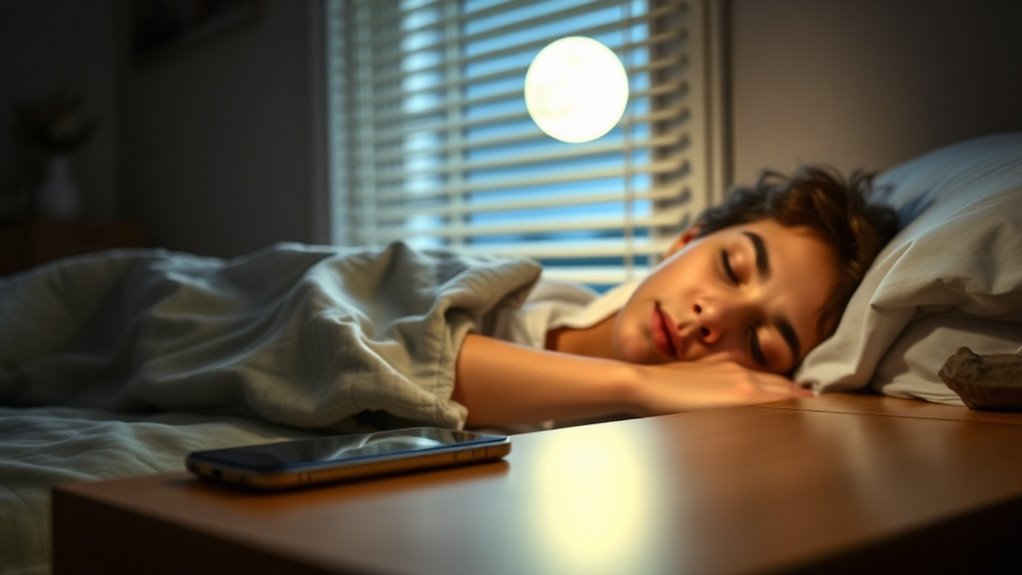
Since using screens late at night can interfere with sleep, it’s important to recognize the early signs of sleep disruption related to device use. Common symptoms include trouble sleeping, such as difficulty falling asleep or frequent awakenings, which indicate poor sleep quality. You may also notice feeling excessively tired during the day, irritability, or difficulty concentrating—signs that your sleep has been disrupted. Exposure to blue light before bed suppresses melatonin production, delaying sleep onset and shortening overall sleep duration. If you find yourself needing more caffeine or feeling less alert during the day, these are additional indicators of poor sleep caused by device use. Recognizing these signs early allows you to adjust your habits, such as limiting screen time before bed. Addressing these issues promptly can help restore healthy sleep patterns, improving overall well-being and reducing the risk of ongoing sleep problems.
Common Questions
Does Reducing Screen Time Improve Sleep?
Reducing screen time before bed considerably improves sleep quality by minimizing blue light exposure, which suppresses melatonin production. Less blue light means your body can naturally produce enough melatonin, helping you fall asleep faster and enjoy deeper rest. Studies show that limiting evening screen use reduces insomnia risk and sleep disruptions, making it easier for you to wake up refreshed. Replacing screens with relaxing activities further enhances your sleep health.
What Is the 3 6 9 12 Rule for Screen Time?
The 3-6-9-12 rule limits children’s screen time to 3 hours for ages 2-5, 1-2 hours for ages 6-12, and recommends no screens an hour before bed. Studies link excessive screen use to tech addiction, emphasizing parental controls and screen-free activities at these milestones. Implementing this rule fosters healthy habits and reduces risks associated with overexposure, supporting better sleep and overall well-being.
Is It Really True Being off Your Phone Before Bed Is Better?
Yes, it’s true. Being off your phone before bed reduces blue light exposure, which can suppress melatonin and delay sleep onset. Incorporating this into your bedtime routines helps improve sleep quality and duration. Research shows that avoiding screens at least one hour before sleep leads to better restfulness, fewer disturbances, and more consistent sleep patterns. Making this change supports healthier sleep habits and overall well-being.
Can More Screen Time Cause Sleepiness?
More screen time can definitely cause sleepiness; studies show that over 7 hours daily increases daytime fatigue. Blue light emitted from screens disrupts melatonin production, leading to sleep disruption. This interference makes it harder to fall asleep and results in feeling sluggish and drowsy during the day. Limiting screen exposure, especially before bed, helps maintain healthy sleep patterns and reduces daytime sleepiness, supporting overall well-being.
To Sum it up
By managing your screen time effectively, you can restore your sleep like a well-tuned instrument. Limiting blue light exposure and establishing a tech-free bedtime routine aren’t just habits—they’re essential for deep, restorative sleep. When you prioritize relaxing activities and set clear boundaries, your nights will become a haven of rest. Remember, your sleep quality is a mirror reflecting your digital habits; take control and watch your well-being thrive.